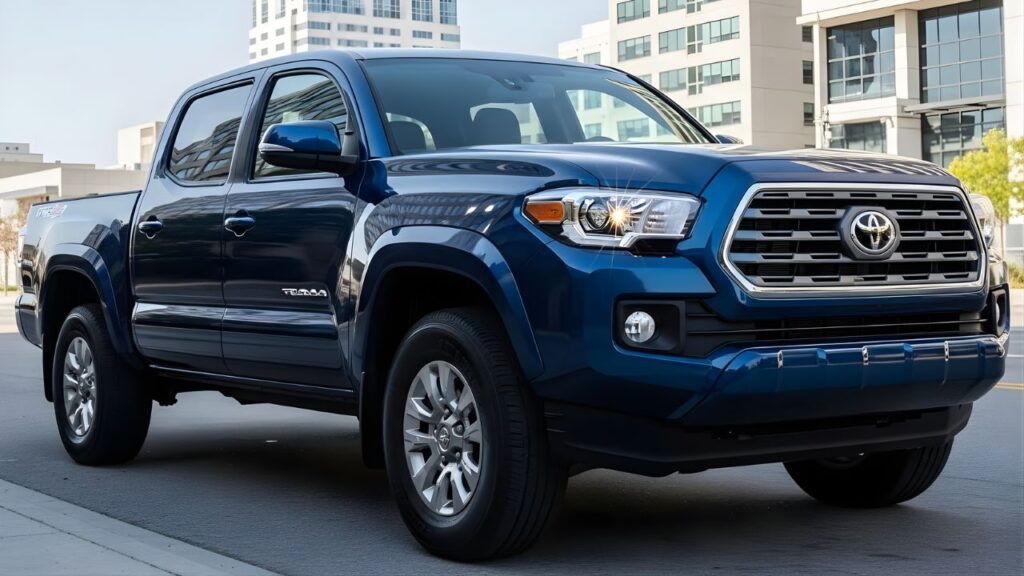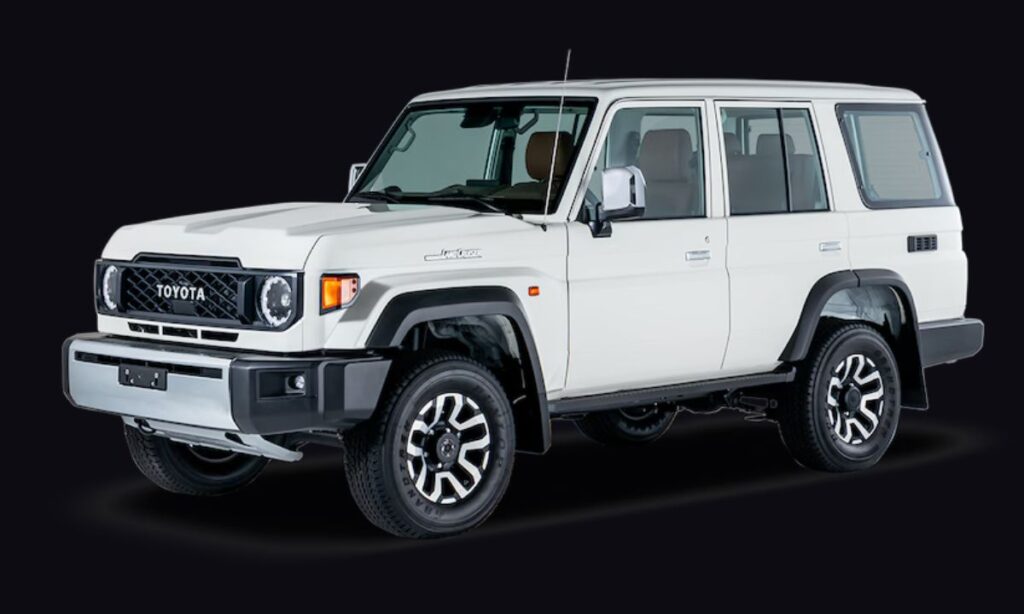
Toyota LandCruiser 70 Series: When most people think of rugged SUVs, the name “LandCruiser 70 Series” evokes dusty mining roads, remote deserts, farm tracks, and places where only a truly tough 4×4 can go — often and return intact. Yet, more than four decades after its debut, the 70 Series hasn’t faded into niche obscurity. Instead, with a carefully managed 2023–24 global refresh, it’s returned with renewed relevance. This is not nostalgia; it’s a strategic reaffirmation of purpose: a vehicle built for durability, utility, and real-world hardship — even today. If you value unpretentious strength rather than flashy comfort, the LC70 stands apart.
Legacy and Revival: From 1984 Workhorse to 2023-24 Global Upgrade
The origins: 70 Series’ role in Toyota’s 4WD lineage
The LandCruiser 70 Series was introduced in 1984 as a replacement for the earlier “40 Series,” targeting commercial, industrial, and rugged-terrain use rather than luxury or urban commuting. Its ladder-frame chassis, simple mechanical construction, and robust 4WD system built a reputation for reliability — especially in regions where roads are poorly maintained, or off-road travel is frequent. Over decades, this made it a favorite among farmers, miners, humanitarian organizations, remote communities, and off-road enthusiasts. Moreover, Toyota offered body configurations and drivetrains suited to real work: single- and double-cab utes, troop carriers, wagons, chassis cabs — a versatility that urban-oriented SUVs seldom match.
Because of this practical foundation, the 70 Series often worked where others failed — a quality that helped sustain its existence long after many legacy SUVs were retired or replaced.
Why Toyota decided to reintroduce the 70 Series in 2023–2024
Despite its commercial success abroad, the 70 Series had been withdrawn from some markets — including its home market Japan — often due to tightening emissions and safety regulations.
However, growing demand from certain customer segments — agricultural, mining, remote logistics, overlanding, and humanitarian — prompted Toyota to bring it back. On November 29, 2023, Toyota officially re-introduced the 70 Series in Japan with updated powertrain, refreshed styling, and improved safety and comfort features while explicitly retaining its core strengths: durability, reliability, and off-road capability.
The 2023–24 upgrade ensures the 70 Series remains practically usable — not just as a relic of the past, but as a functioning, modern heavy-duty 4×4.
What’s New for 2023–2024: Engines, Tech & Comfort Upgrades
The 2.8-litre 4-cylinder turbo-diesel + 6-speed auto — a game-changer
The most significant change in the latest 70 Series update is the adoption of a 2.8-litre turbo-diesel 4-cylinder engine (1GD-FTV) — previously used in the newer LandCruiser J250 and other Toyota 4×4s — mated to a 6-speed automatic transmission. This marks the first time the 70 Series offers an automatic gearbox.
Output: 204 PS (150 kW) and 500 Nm torque, delivered broadly between 1,600–2,800 rpm.
This new combination brings several practical advantages:
- Reduced curb weight compared to the old V8, improving payload and fuel efficiency — a big plus for work-oriented buyers.
- Easier driving for non-manual drivers in urban or semi-urban use.
- Smoother power delivery at low rpm — ideal for off-road, towing, and low-speed manoeuvres.
- Better fuel economy and lower emissions compared to traditional V8 diesel (in many conditions).
These updates have meaningfully lowered the barrier to entry for those who value utility but dislike old-school manual V8 rigs.
Remaining V8 turbo-diesel option: why some buyers still prefer it
Toyota has retained the traditional 4.5-litre turbo-diesel V8 in many markets, paired with a 5-speed manual gearbox — at least for now. This option remains relevant for buyers who:
- Need maximum low-end torque for heavy-duty towing or hauling
- Prefer the tried-and-true robustness and simplicity of V8 diesel engines
- Operate in difficult or remote conditions where familiarity with older systems helps (mechanic availability, spare parts, known behavior)
Although the 2.8-litre delivers comparable power and more torque, the V8 still carries symbolic weight among traditionalists — and in some harsh-use scenarios, may give slightly better long-term durability.
For now, Toyota continues to offer both powertrains across most 70 Series body styles and grades, giving buyers real choice.
Interior, safety and convenience updates for modern use
On the inside, the 2023–24 refresh brings functional but meaningful upgrades:
- A new 4.2-inch multi-information display in the instrument cluster with retro-style graphics, referencing old LandCruiser heritage.
- A 6.7-inch touchscreen infotainment system with wired Apple CarPlay & Android Auto support — a long-overdue modern convenience.
- Upgraded lighting: retro-inspired circular LED headlamps, updated grille and bumper design — styling that nods to original LandCruiser lines while giving better illumination and durability.
- Enhanced safety and driver assist features as part of the Toyota Safety Sense suite: lane departure alert, road sign assist, automatic high beam, and more, depending on trim.
These updates make the 70 Series less of a pure “workhorse” and more of a viable daily driver — or at least tolerable for occasional on-road travel — without compromising its core off-road DNA.
Real-World Strengths: Where the 70 Series Still Beats Almost Any SUV
Ladder-frame backbone, robust 4×4 hardware, and off-road credibility
At its heart, the 70 Series remains built on a rugged ladder-frame chassis combined with live axles, mechanical 4×4 system, and low-range gearing — an architecture that, while simple, has proven resilient for decades in extreme conditions
This kind of hardware is rare these days: many modern “SUVs” are unibody, soft-road-oriented, or ride-tuned for comfort at the cost of off-road capability. The 70 Series doesn’t mix messages — it’s still a proper 4×4 built for utility.
For those who need to traverse beaches, deserts, rural dirt tracks, steep forest trails, or remote farms — or carry heavy loads — this remains among the most capable factory-built SUVs globally.
Simplicity, reliability, and ease of maintenance — a tool rather than a toy
One of the underlying strengths of the 70 Series is that it does not rely on delicate, high-tech systems for its core function. The mechanicals are straightforward: minimal electronics (especially in basic trims), easily accessible parts, easy to repair even in remote regions. That simplicity — often derided by luxury-segment buyers — is a virtue in harsh or remote environments.
Given its decades-long global presence, the 70 Series has a vast existing supply chain of parts, aftermarket upgrades, and service know-how. For end-users, that means: easier maintenance, lower per-kilometre running cost, and higher long-term reliability — often more important than short-term creature comforts.
Versatility across roles: from farm/mining/work fleet to adventure vehicle
Because of its multiple body styles (single/double cab utes, chassis-cab, troop carrier, wagon, etc.) and drivetrain choices, the 70 Series serves a wide variety of roles:
- Commercial workhorse for agriculture, mining, rural logistics, NGOs.
- Overlanding and expedition platform for remote travel, adventure tourism, humanitarian missions.
- Off-road recreational vehicle for enthusiasts who value reliability over luxury.
That versatility had made it a go-to vehicle for international organizations, remote-area service fleets, and back-country travellers — and now, with modern comfort and safety upgrades, its appeal is broader than ever.
Market Position, Use Cases, and Global Footprint in 2025
Who is Toyota targeting now (commercial, rural, overlanding, export markets)?
Toyota’s re-introduction of the 70 Series is clearly aimed at segments that value function over flash:
- Agricultural, mining, and remote-industry sectors in countries with challenging terrain.
- Humanitarian, relief and NGO fleets that require dependable vehicles capable of handling rough roads and heavy usage.
- Overlanding and expedition communities — adventure seekers who want mechanical simplicity, reliability, and the capacity to carry loads, water, supplies.
- Buyers in emerging and developing markets where maintenance infrastructure may be basic, but reliability is critical.
In short: those who need a vehicle that works — consistently — under tough real-world conditions.
Where is it sold — and why not everywhere (e.g. emissions, regulations)?
The 70 Series remains available selectively, not globally. That’s because its heavy-duty diesel engines, ladder-frame construction, and relatively basic safety/comfort spec still struggle to meet increasingly strict emissions, crash-safety, and comfort expectations in many Western markets.
As a result:
- It remains popular in markets such as Australia, parts of Africa, Middle East, rural Asia, parts of South America, and other regions where utility trumps regulatory purity.
- In markets where regulations are tight (Europe, parts of North America), the 70 Series is mostly absent — although private imports and grey-market variants still exist.
Given that, Toyota’s 2023–24 refresh is smart: by integrating a modern diesel (2.8-litre) that can meet stricter standards — and offering an automatic gearbox — the 70 Series becomes more viable for a wider, though still selective, global audience.
Aftermarket culture, customization and community around 70 Series
Because the 70 Series has been produced continuously since 1984, and because of its simplicity and durability, there is a large global aftermarket ecosystem: spare parts, off-road gear, overlanding accessories, upgraded suspensions, retrofits of modern conveniences (lighting, infotainment), and more. Some industry reports even suggest the global parts and accessories ecosystem for the 70 Series (and similar heavy-duty 4×4s) is growing robustly.
This encourages owners to customize their LC70s for specific needs: long-range travel, heavy hauling, desert/off-road use, or even overlanding setups with modular storage, rooftop tents, dual-battery systems, etc.
For many enthusiasts and utility buyers alike, that flexibility — the ability to tailor the vehicle to exact needs — is a huge advantage over more “locked-down” modern SUVs.
What to Know Before Buying: Strengths, Trade-offs & Buy-Smart Advice
Which engine/transmission spec makes sense for you (2.8 vs V8)?
Choose the 2.8-litre 4-cylinder + auto if:
- You want a capable 4×4 for mixed duty — occasional off-road, highway driving, lighter loads, overlanding.
- You don’t want to wrestle with a manual gearbox or heavy V8 diesel — especially if you drive in built-up areas.
- You value better fuel efficiency, lower running costs, and easier everyday drivability.
Choose the 4.5-litre V8 + manual if:
- You need maximum torque and robustness for heavy towing, hauling, or continuous high-load use (construction, mining, heavy gear).
- You expect to operate in remote regions where simplicity and familiarity matter for maintenance/repairs.
- You prioritize long-term durability over comfort — or value the legacy/culture of the V8 drivetrain.
Given evolving regulations and shifting norms, the 2.8-litre option already works for many buyers — but for traditionalists and heavy-duty users, the V8 remains the default “toughest” choice (for now).
What you lose vs. modern SUVs — ride quality, features, on-road refinement
If you expect luxury, refinement, and smooth urban SUV characteristics — the 70 Series will feel raw. Compared with modern unibody SUVs:
- The ride is firm, the noise insulation minimal, and high-speed handling less composed.
- On-road manners remain basic; despite updates, the 70 Series is not about luxury or comfort.
- If you prioritize spacious, plush interiors, sophisticated suspension, and convenience features, you may be disappointed.
In short: the 70 Series remains a work-oriented 4×4 — not a lifestyle SUV (unless modified heavily).
Maintenance, resale value and long-term ownership expectations
- Maintenance and spares: Because of its long production run and utilitarian design, spare parts remain widely available — both OEM and aftermarket — and repairs tend to be simpler than modern SUVs. That lowers total cost of ownership over long use, especially in rough environments.
- Resale value: In markets where 70 Series demand remains (rural areas, commercial fleets, overlanding communities), properly maintained LC70s tend to hold value fairly well. However, desert-spec or heavy-use models may depreciate faster due to wear and tear.
- Long-term use: If maintained properly — regular servicing, gearbox and differential fluid changes, rust prevention — a 70 Series can run for decades, especially in the hands of owners who treat them as tools rather than toys.
For buyers seeking a “set-and-forget” SUV that will soldier on reliably for years, the 70 Series remains among the best in its class.
FAQs Toyota LandCruiser 70 Series
Q : Is the Toyota LandCruiser 70 Series still in production in 2025?
Ans : Yes. Toyota re-introduced the 70 Series globally (including Japan) in late 2023 with updated engine, safety, and comfort features. The 2023–24 refresh keeps it in production in many markets worldwide.
Q : What engine options are available in the latest 70 Series?
Ans : As of the 2023–24 update: a new 2.8-litre turbo-diesel 4-cylinder (1GD-FTV) with a 6-speed automatic gearbox, producing 204 PS and 500 Nm; and the traditional 4.5-litre turbo-diesel V8 (with 5-speed manual) remains offered in many markets
Q : Is the 70 Series suitable for modern urban or highway driving?
Ans : It can be, especially in the 2.8-litre automatic spec — but the 70 Series is fundamentally built for durability and off-road / utilitarian use. Compared with modern unibody SUVs, ride comfort, refinement, and noise insulation remain basic
Q : Why is the 70 Series still popular among farms, mining companies, and overlanders?
Ans : Because of its ladder-frame chassis, simple and reliable mechanicals, strong 4×4 hardware, ease of maintenance, and the ability to carry heavy loads or tackle rough terrain — making it a dependable workhorse in harsh environments.
Q : Does the 2023–24 70 Series have modern safety and convenience features?
Ans : Yes — Toyota added driver-assistance and safety systems such as lane departure alert, road sign assist, auto high beams under Toyota Safety Sense (in many trims), as well as upgraded infotainment (Apple CarPlay and Android Auto) and a revised interior layout.
Q : Is it easy to get spare parts or maintain a 70 Series in remote or developing regions?
Ans : Is it easy to get spare parts or maintain a 70 Series in remote or developing regions?
A6: Yes. Because the 70 Series has been in continuous production since 1984, there is a large global aftermarket for spare parts and accessories — and the mechanical simplicity helps to keep maintenance manageable even in remote areas.
Q : Who should NOT buy a 70 Series?
Ans : If you prioritize luxury, smooth ride comfort, high-speed highway refinement, or premium SUV amenities, 70 Series may disappoint. It’s best suited to people needing ruggedness, simplicity, utility, or off-road/endurance performance — not someone after a city-friendly luxury SUV.
Conclusion: The 70 Series as a Statement — Practical, Authentic, Purposeful
The 2023–24 update to the LandCruiser 70 Series shows that Toyota did not salvage an old relic for sentimental reasons. Instead, they carefully re-engineered and repositioned a legendary workhorse to remain relevant in 2025 and beyond. The addition of a modern 2.8-litre diesel engine with automatic transmission, safety tech, and updated styling makes it more accessible and usable for broader markets — while the old-school ladder-frame, mechanical 4×4 hardware and optional V8 retain the uncompromising toughness that made the 70 Series iconic.
For buyers who need a durable, purpose-built 4×4 that doesn’t pamper — but works — the 70 Series remains among the best in the world. If you approach it with realistic expectations (utility over comfort), respect its strengths, and maintain it properly, it can be far more valuable than many expensive but fragile “lifestyle” SUVs.
In short: the LandCruiser 70 Series continues to earn its place — not through marketing glitz, but through honest capability, decades of proven reliability, and real-world essentials.
If you like, I can build a side-by-side comparison (2024 70 Series vs modern premium 4×4s like Prado / Fortuner / G-Wagon-class SUVs) — highlighting exactly where 70 Series wins, where it compromises, and for whom it makes sense in 2025. Want me to start that now?