The Nissan Silvia S15 (2002) is a compact rear-wheel-drive sports coupe that gained global popularity for its balanced performance, clean design, and strong reliability. While it was not designed as a traditional family car or mid-size sedan, many buyers today consider it for daily use practicality, weekend driving, and long-term ownership. This review takes a clear, factual look at the Silvia S15 as a commuter vehicle, explaining where it fits well and where it falls short for family and everyday needs.
The 2002 Nissan Silvia S15 represents the final generation of Nissan’s iconic Silvia lineup. It is a two-door petrol-powered sports coupe built on a lightweight platform with a focus on driving enjoyment rather than luxury. In today’s used-car market, the Silvia S15 is often discussed alongside practical commuter cars, even though it is very different from a crossover SUV or fuel-efficient car built for families.
For buyers looking at long-term ownership, the Silvia S15 offers a mix of strong highway performance, proven engineering, and relatively simple mechanicals. However, it also comes with clear compromises in spacious cabin, safety technology, and family comfort.
Exterior Design & Styling
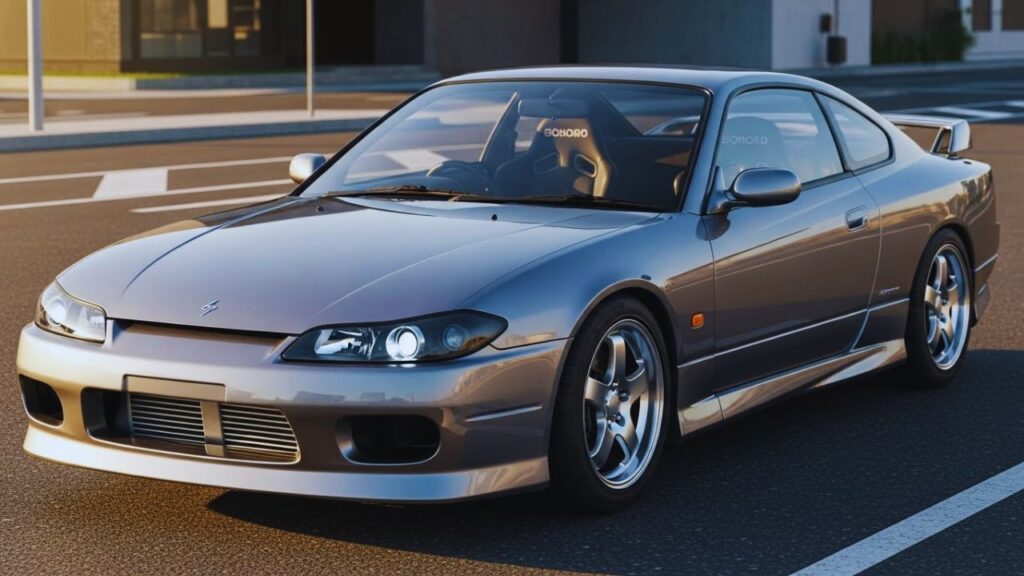
The Nissan Silvia S15 (2002) features a clean and timeless modern design that still looks relevant today. Its low stance, sharp headlights, and smooth body lines give it a sporty yet simple appearance. Compared to bulky sedans or SUVs, the Silvia looks compact and focused.
The car’s two-door layout and sloping roofline clearly show its sports coupe identity. While this design appeals to enthusiasts, it limits rear-seat access and overall versatility. Buyers expecting the visual presence of a mid-size sedan or family car may find the Silvia too small.
Despite its age, paint quality and body fit were solid for its time. Rust protection is average, so condition matters more than age when buying used.
Interior & Cabin Space
Inside, the Nissan Silvia S15 keeps things simple and driver-focused. The dashboard layout is clean, with easy-to-reach controls and clear analog gauges. Materials are durable but not premium, which aligns with the car’s original price positioning.
The spacious cabin claim only applies to the front seats. Front passengers have good legroom and headroom, making it acceptable for city driving and daily commutes. Rear seats, however, are tight and best suited for children or short trips.
As a family car, the Silvia struggles due to limited rear space and a small trunk. For single users or couples, cabin comfort is acceptable, but families may find it restrictive.
Engine & Performance
The 2002 Nissan Silvia S15 came with petrol engine options, most notably the SR20 series. The turbocharged SR20DET is the most well-known, offering strong acceleration and responsive power delivery. There was also a naturally aspirated version for buyers focused on smoother driving.
Performance is one of the Silvia’s biggest strengths. Power delivery is linear, and the rear-wheel-drive setup provides excellent balance. For highway performance, the car feels stable and confident, even at higher speeds.
However, compared to modern cars with a hybrid system, the Silvia lacks efficiency and low-end torque optimization. It is built for engagement, not relaxed family cruising.
Fuel Economy & Mileage
Fuel economy is reasonable for a petrol sports coupe from the early 2000s. In city driving, expect moderate fuel consumption, especially in turbocharged variants. Highway mileage improves when driven calmly at steady speeds.
Compared to a modern fuel-efficient car or hybrid, the Silvia is less economical. It cannot match the low running costs of newer commuter sedans or compact SUVs.
For daily commuters with short distances, fuel costs remain manageable. Long-distance family use may become expensive over time.
Technology & Features
The Nissan Silvia S15 (2002) reflects the technology standards of its era. Basic features include air conditioning, power windows, power mirrors, and a factory audio system. Some trims offered climate control and sport-oriented gauges.
There is no modern infotainment system with touchscreen support, smartphone connectivity, or navigation. Buyers upgrading from newer vehicles will notice this immediately.
While simple technology can improve reliability and reduce maintenance costs, it limits convenience. Families used to modern features may find the cabin outdated.
Safety & Driver Assistance
Safety is an area where the Silvia S15 shows its age. Standard safety equipment included front airbags, seatbelts, and basic structural protection. Advanced systems were limited or unavailable.
There are no modern advanced safety features such as lane assist, adaptive cruise control, or automatic emergency braking. This places the Silvia behind newer sedans and SUVs designed for family use.
For cautious drivers, the car’s predictable handling helps with safety. However, families prioritizing maximum protection should consider more modern alternatives.
Driving Experience & Ride Quality
The driving experience is where the Nissan Silvia S15 (2002) truly stands out. Steering feel is direct, and suspension tuning favors control over softness. This makes the car enjoyable on open roads and highways.
Ride quality is firm, especially on uneven city roads. While acceptable for daily use, it lacks the comfort of a commuter vehicle designed for families. Road noise is noticeable at higher speeds.
For drivers who enjoy engagement, the Silvia delivers. For passengers seeking comfort, especially over long trips, it may feel tiring.
Pricing & Trim Levels
When new, the Silvia S15 was priced as an affordable sports coupe. Today, pricing depends heavily on condition, mileage, and engine variant. Turbo models command higher prices due to demand.
There were multiple trim options, ranging from basic naturally aspirated versions to performance-focused turbo trims. Higher trims offered better seats and suspension tuning.
While upfront cost may be reasonable, buyers should factor in maintenance costs, insurance, and fuel. Resale demand remains strong, supporting good resale value.
Competition & Rivals
During its time, the Silvia S15 competed with cars like the Toyota Celica and Honda Integra. Today, its rivals include used sporty sedans and compact coupes.
Compared to a mid-size sedan, the Silvia offers better driving feel but far less space. Against a crossover SUV, it loses practicality but gains performance character.
In a rivals comparison, the Silvia appeals to drivers rather than families. It is not a direct replacement for modern commuter cars.
Who Should Buy This
The Nissan Silvia S15 (2002) is best suited for individuals or couples who value driving enjoyment and simple ownership. It works as a personal commuter vehicle for those who do not need rear-seat space.
Families looking for a family car with safety, comfort, and space should consider newer sedans or SUVs. The Silvia is not ideal for child seats or frequent family trips.
For enthusiasts seeking strong reliability, engaging highway performance, and solid resale value, the Silvia remains appealing.
Final Verdict
The 2002 Nissan Silvia S15 is a focused sports coupe that delivers enjoyable performance and long-term mechanical reliability. It performs well in city driving and on highways, but it lacks the comfort, safety, and space expected from modern family-oriented vehicles.
As a daily driver for the right owner, it can be practical enough. As a family solution, it falls short compared to sedans, hybrids, and SUVs.
Buyers who understand its strengths and weaknesses will appreciate the Silvia for what it is: a classic petrol-powered coupe built for drivers, not families, with lasting appeal and solid long-term ownership potential.