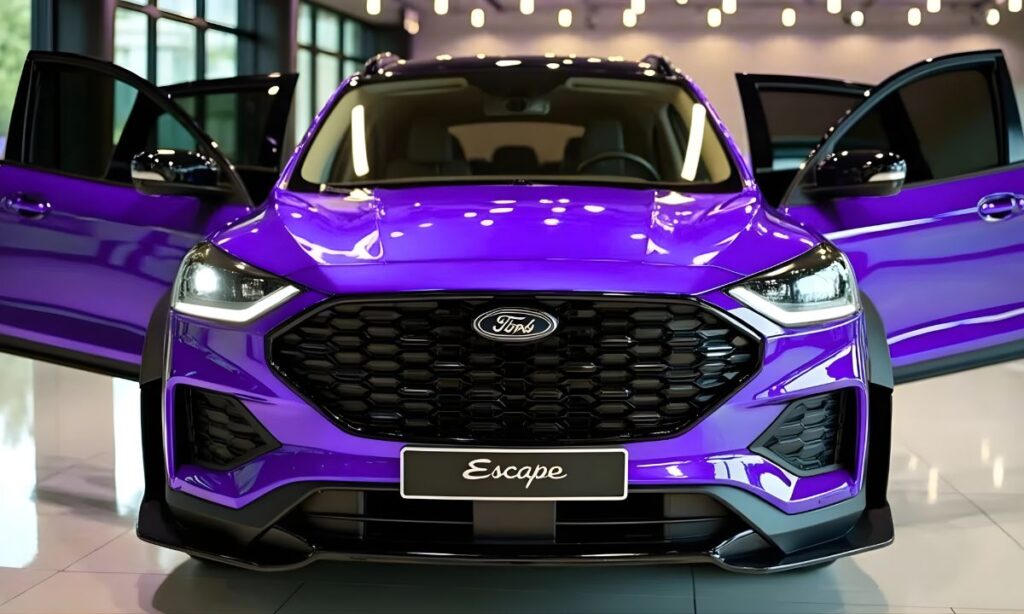
Ford Escape Hybrid 2025: The 2025 Ford Escape Hybrid is not a headline-grabbing halo car; it’s a careful engineering exercise in making a mainstream compact SUV meaningfully more efficient without forcing compromises on space, features, or price. If you want a hybrid that behaves predictably, scales comfortably from daily commutes to weekend luggage runs, and includes modern driver aids without expensive options, the Escape Hybrid deserves serious consideration.
Quick take: what changed in 2025 and why it matters
Key mechanical updates (powertrain & output)
Ford standardized a 2.5-liter iVCT Atkinson-cycle I-4 hybrid powertrain for the hybrid models, delivering roughly 163 hp from the engine and a higher “total system” output once the electric motor contribution is counted — dealers and Ford materials list the system in the ~190–192 hp range for the hybrid and up to ~210 hp for the plug-in hybrid variant. That combination gives the Escape Hybrid competitive acceleration in urban driving while keeping fuel consumption sharply lower than a pure gas Escape.
Price positioning and trim strategy
For 2025 Ford tightened pricing and simplified the value ladder: base Escape trims start in the high-$20k range, with hybrid models beginning in the low-to-mid $30k band depending on trim and options; the plug-in hybrid sits above those. That pricing approach aligns the Escape Hybrid more directly with mainstream rivals (RAV4 Hybrid, CR-V Hybrid) while offering more technology on mid and upper trims.
Powertrain, fuel economy and real-world efficiency
How the 2.5L Atkinson hybrid works (eCVT, battery role)
The Escape Hybrid uses a 2.5L Atkinson-cycle gas engine paired to an electric motor and an electronically controlled CVT (eCVT). The Atkinson cycle favors efficiency over peak power; the electric motor fills torque gaps at low RPM, making launches brisk without heavy throttle inputs. The eCVT keeps the engine in its efficient band more often than a conventional automatic would, which is the core reason owners see large city mpg gains.
EPA numbers vs. what owners actually see (city/highway/combined)
EPA estimates for the hybrid Escape are strong: dealers and spec sheets list around 42 mpg city / 36 mpg highway / ~39 mpg combined for the hybrid powertrain, with plug-in hybrid variants rated at much higher MPGe when on electric charge (100+ MPGe combined for PHEV in electric+gas cycle). Expect lower numbers on aggressive highway trips or when towing; conversely, conservative city driving with frequent regenerative braking can exceed EPA city figures.
When to choose Hybrid vs. Plug-In Hybrid for your use case
- Hybrid: Best if your daily commute is moderate (under ~60 miles round-trip) and you prioritize fuel savings without charging infrastructure. Good balance of price and efficiency.
- Plug-In Hybrid (PHEV): Best if you can charge at home/work and most daily trips are within the EV range — you’ll run many days on electric and only use the gas engine for longer trips, yielding significantly lower operating costs. The PHEV costs more upfront but can be economical if you maximize electric miles.
Packaging: interior space, cargo, towing and day-to-day practicality
Measurements that change purchase decisions (legroom, cargo volume)
Ford kept Escape’s interior dimensions competitive: generous first- and second-row legroom (front ~42.4 in, rear ~38.9 in per Ford materials) and a maximum cargo volume around 60.8 cu ft with the rear seats folded. That sliding second row and wide hatch opening make the Escape more useful for families and gear than many rivals with similar footprint.
Towing and payload: realistic limits and how they affect trips
Don’t overestimate the hybrid’s haul—towing capacity for hybrid trims is modest (the Escape’s max RV/tow ratings vary by powertrain and equipment but are usually in the 1,500–3,500 lb range depending on engine and package). If you plan regular towing of heavy trailers, select the higher-capacity EcoBoost models and the proper tow package. For light boats, small trailers, or bike racks, the hybrid variants are adequate.
Technology & safety: Ford’s pragmatic approach to driver assistance
What Co-Pilot360 Assist / Assist+ includes and which trims get it
Ford’s safety suite is a core selling point. The Escape Hybrid can be optioned with Ford Co-Pilot360 Assist+, which bundles adaptive cruise with stop-and-go, lane centering, enhanced park assist features, and additional sensing systems. Some features are standard across trims (automatic emergency braking, lane-keeping), with the full Assist+ available on mid and upper trims or as part of option packages. This makes advanced driving aids accessible without forcing buyers straight to top trims.
Infotainment, connectivity and user experience (SYNC, screens, OTA)
The 2025 Escape features a modernized SYNC system with a large center touchscreen (up to 13.2 inches on higher trims), wireless Apple CarPlay/Android Auto, and OTA updates for certain systems. Ford’s interface still trails the very best in ease-of-use, but it is functional, quick to pair phones, and integrates vehicle hybrid energy flows in an intuitive screen for monitoring EV vs. gas usage.
Trim selection and ownership economics (prices, incentives, resale)
Who should buy each trim (Active → Platinum, PHEV)
- Active — value-oriented buyers who want core features at a lower price. Good for urban commuters who don’t need leather or big wheels.
- ST-Line & ST-Line Select — buyers who want sportier styling and added tech without full luxury pricing. Often the sweet spot for most buyers.
- ST-Line Elite / Platinum — buyers who prioritize interior comfort, driver aids, and maximum infotainment. Choose these if you want near-luxury fit/finish.
- Plug-In Hybrid — urban families who can charge nightly and want the lowest possible operating cost per mile.
Total cost of ownership: fuel, maintenance, warranty considerations
Hybrids reduce fuel costs significantly but don’t eliminate maintenance; expect similar scheduled service to conventional compact SUVs, with potential savings on brakes (regen braking reduces pad wear). Factory warranties are standard Ford coverage; check for any hybrid-specific battery warranties in your region. Incentives (state/local) can materially lower effective PHEV cost in many markets — run the numbers for your zip code.
Underreported strengths, tradeoffs and final buying recommendation
Less obvious strengths (interior ergonomics, sliding rear seat, accessory ecosystem)
Two small details change ownership satisfaction: the sliding rear seat offers flexible cargo/legroom tradeoff, and Ford’s broad accessory catalog (roof rails, cargo organizers, integrated bike racks) means you can adapt the Escape to active lifestyles without third-party modding. Combined with improved electronic packaging for hybrid components, the interior compromises are minimal compared to previous gen hybrids.
Tradeoffs (competitor strengths, driving feel vs. rivals)
The Escape Hybrid is efficient and practical, but if you prioritize sporty handling or premium cabin materials at every price point, competitors like the Mazda CX-50 (for driving dynamics) or RAV4 Prime (if you want higher PHEV electric range and acceleration) may be better fits. Also, full EVs still beat hybrids for lower operating cost if you have charging access and want zero tailpipe emissions.
Final recommendation (short): If you want a compact SUV hybrid that delivers genuine city fuel economy, a practical cabin, and advanced safety tech at realistic pricing, the 2025 Ford Escape Hybrid hits the balance most buyers actually use — especially on mid-range ST-Line Select and Elite trims.
FAQs (schema-friendly — include these on the page for featured snippets)
Q : What is the EPA fuel economy for the 2025 Ford Escape Hybrid?
Ans : EPA estimates are approximately 42 mpg city / 36 mpg highway / ~39 mpg combined for the hybrid powertrain. Actual results vary with driving style and conditions.
Q : How much does the 2025 Escape Hybrid cost?
Ans : Manufacturer and dealer pricing places hybrid trims starting in the low-to-mid $30,000 range; base non-hybrid trims are lower (high $20k), and the plug-in hybrid starts higher, typically in the high $30k range before incentives. Exact MSRP depends on trim and options.
Q : What’s the difference between the Escape Hybrid and the Plug-In Hybrid?
Ans : The Hybrid uses regenerative charging and the gas engine; the PHEV adds a larger battery allowing a significant number of all-electric miles and a higher MPGe rating when charged. PHEV costs more but can reduce fuel use if regularly charged.
Q : Can the Escape Hybrid tow a trailer?
Ans : Yes, but towing capacity depends on powertrain and equipment. Hybrid models are suitable for light towing (commonly around 1,500 lb), while higher-capacity towing is available with certain EcoBoost engines and tow packages. Check the owner’s guide and dealer spec sheet for your chosen configuration
Q : Is all-wheel drive available on the Escape Hybrid?
Ans : Yes. Ford offers AWD on many Escape trims, including hybrid variants on certain configurations. AWD can modestly reduce EPA MPG compared with FWD versions
Closing (buying signal + CTA)
If your priority is a practical compact SUV that reliably chops fuel bills without demanding a charger, start your test drive in an ST-Line Select hybrid — it often represents the best mix of technology, ride comfort, and value. If you have nightly charging and mainly short trips, test the PHEV to quantify how many gas-free days you’ll get.