Honda CR-V 2025: The 2025 Honda CR-V is more than a mid-cycle refresh. It’s a carefully re-balanced package: punchy turbocharged gas engines for buyers who want predictable performance, and a two-motor hybrid that reads more like a small SUV powertrain from a larger model — tuned for everyday acceleration and economy. For shoppers who care about total cost of ownership and straightforward functionality, this CR-V tightens Honda’s long-standing strengths (space, reliability, safety tech) while smoothing out weaknesses many buyers complained about in earlier years (drab interiors, lackluster hybrid integration). — (sources: Honda product pages; Car and Driver).
What’s new: design, platform, and where it comes from
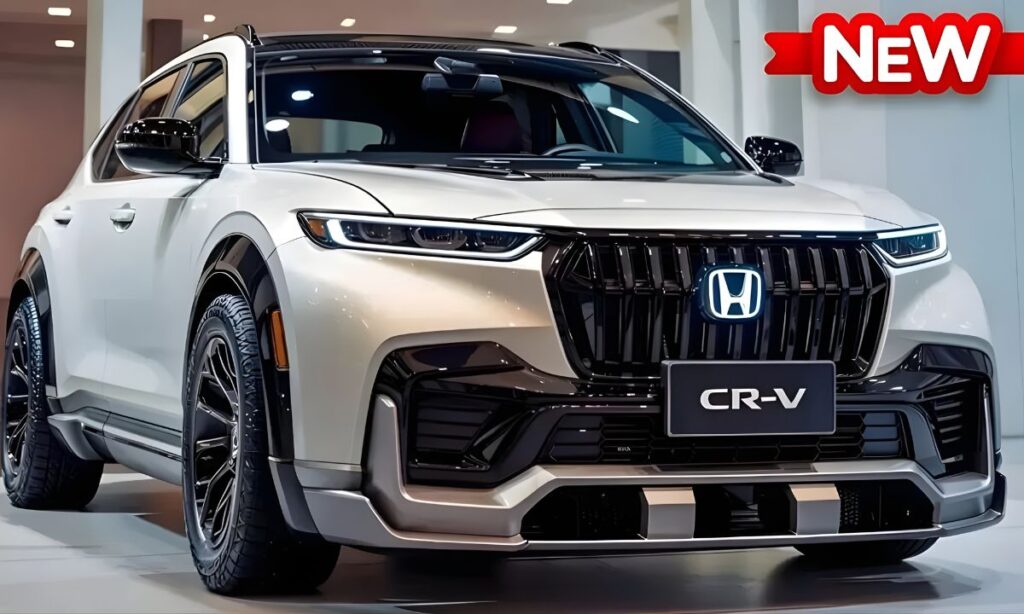
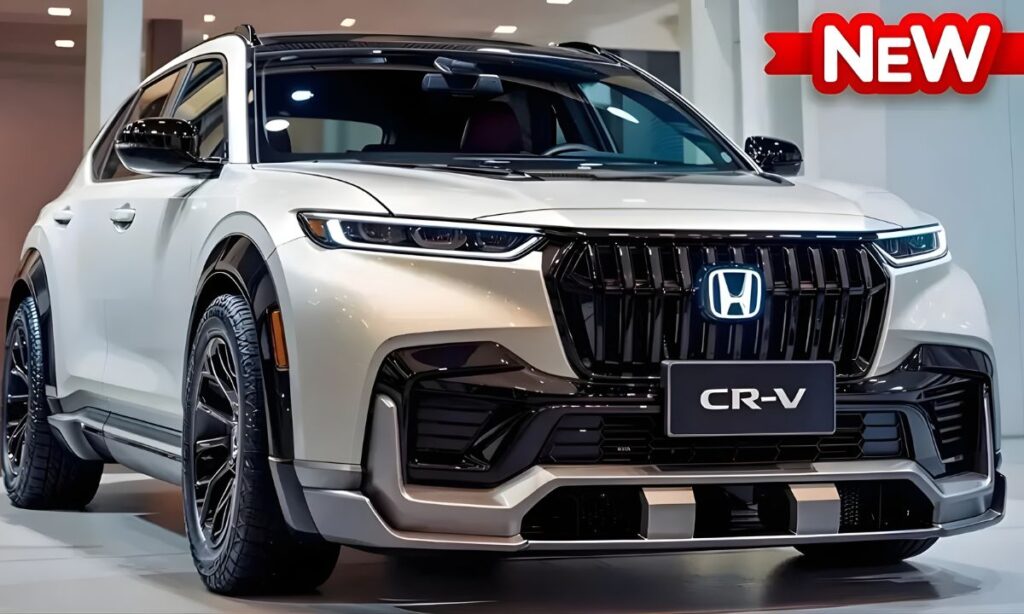
Honda gave the 2025 CR-V a bolder front face, a longer wheelbase feel, and a stance aimed at communicating capability without fully committing to ruggedism. Expect cleaner lines, a larger gloss-black grille on upper trims, and trim-specific accents (Sport Touring gets unique lower-bumper treatment). These styling cues serve two purposes: better aerodynamic tuning and a cabin that feels roomier because of the longer windshield-to-axle packaging.
Exterior language and packaging
The visual update isn’t just styling — wheel sizes, roofline rake, and an expanded track subtly shift the CR-V’s road posture. Roof rails, a hands-free power tailgate, and available gloss alloy wheels are now more widely distributed across trims, so what used to be dealer add-ons are increasingly factory standard at mid levels.
Chassis, dimensions, and where it’s built
Underneath, the CR-V remains grounded in Honda’s compact-SUV architecture with suspension tuning favoring comfort and predictable roll control. Importantly, Honda’s manufacturing footprint is changing: strategic North American production shifts reported in 2025 mean future CR-V distribution and options will be shaped by regional assembly plans — a factor to watch for availability and pricing.
Powertrains and real-world economy — the numbers that matter
Honda offers two primary power approaches: a 1.5-L turbo four for conventional buyers, and a two-motor hybrid for efficiency seekers. Neither is vaporware — they’re tuned around practical use cases with distinct personalities.
Gasoline 1.5-L turbo: real numbers and behavior
The 1.5-liter turbocharged engine produces roughly 190 horsepower and about 179 lb-ft of torque in the US spec CR-V. Paired to a CVT and available front- or all-wheel drive, it’s designed to deliver smooth mid-range power rather than explosive acceleration — good for merging and highway passing but not meant to outpace sport SUVs. Expect brisk, linear throttle response and fuel economy that’s competitive for the class when driven conservatively.
Two-motor hybrid: layout, output, and economy
The hybrid system is the CR-V’s biggest “value” move: two electric motors working with a gasoline engine produce about 204 horsepower (system net), and Honda’s packaging yields real-world urban efficiency numbers that often beat headline EPA highway figures in mixed city driving. The hybrid targets those who commute daily with start-stop traffic or those who value instant low-end torque for merging—the electric assist fills the gap where small turbo engines can feel laggy. Honda rates the hybrid around the low-40s mpg in city scenarios on some test cycles, but expect mid-30s on mixed highway runs in everyday use.
AWD, trail-capable options and towing
Real tow capacity is modest and mirrors class norms; the CR-V is not a towing specialist. However, Real Time AWD systems (and TrailSport-like packages in some markets) enhance grip and confidence on light off-road or poor-weather runs. If you need rock-crawler capability, step up to a larger SUV; but for muddy campsites and snowbound commutes, the CR-V’s AWD setup is more than adequate.
Interior, tech, and daily-use reality
Honda improved the CR-V’s interior where it counts: ergonomics, usable storage, and an infotainment system that finally feels contemporary.
Cabin ergonomics, cargo, and visibility
The CR-V remains a leader in usable cargo volume — roughly 39 cu ft behind the rear seats and approaching high-70s cu-ft with seats folded, depending on market spec. Rear legroom is competitive (around 41 inches reported), and the seating posture prioritizes visibility and long-drive comfort over aggressive bolstering. Practical touches — flat load floor, clever under-floor storage, and widely available hands-free tailgate — keep the CR-V family friendly.
Infotainment, connectivity, and updates
Honda offers a range of touchscreen sizes: basic trims stick to a modest display, while EX-L and Sport Touring hybrids jump to larger screens with wireless Apple CarPlay/Android Auto on many variants. Importantly, Honda is expanding OTA update capability and app integration that keep navigation, voice recognition, and connected services current without dealer visits. For buyers who value longevity, that reduces the annoyance of dated infotainment in year-three ownership.
Driver aids and safety: what Honda Sensing actually does
Honda Sensing arrives standard across the lineup and includes Collision Mitigation Braking, Lane Keeping Assist, Adaptive Cruise Control with Traffic Jam Assist, and Road Departure Mitigation. These systems work well in daily driving and are now tuned for smoother intervention — less “jerky” steering input than prior implementations. Note: there are ongoing regulatory probes and investigations into several Honda models (including some CR-V model years) for specific safety incidents; keep an eye on NHTSA bulletins and campaign notices if you’re shopping used.
Trims, pricing, and value proposition — smart buying guidance
Honda’s trim ladder is logical: base LX (value), EX (comfort), EX-L (luxury features), Sport/Sport-L (performance-oriented hybrid options), and Sport Touring (loaded hybrid). Pricing in the U.S. starts in the low $30k range and climbs into the mid-$30k for equipped hybrids; exact figures vary by market and options. For many buyers the hybrid Sport or Sport-L delivers the best balance of features, fuel economy, and resale value.
Which trim should you buy?
- Daily commuter / fuel saver: Sport Hybrid (if you drive city miles).
- Family buyers who want comfort + leather: EX-L.
- Tech lovers and long-distance drivers: Sport Touring Hybrid.
- Budget buyers who want simplicity: LX with the 1.5-L turbo.
Market differences and availability
Pricing and engine availability vary internationally — India, for example, has different trim and price sensitivity (prices reported significantly higher relative to the U.S.), while Canada has similar trim structure with slightly different standard features. Check local dealer inventory because Honda’s regional manufacturing changes may affect allocation and lead times.
Real-world strengths and tradeoffs — what reviewers and owners note
Honda’s execution here is pragmatic: solid ergonomics, class-leading utility, and a hybrid that delivers usable economy. But there are tradeoffs.
Strengths
- Predictable, efficient hybrid system with real city MPG benefits.
- Spacious cabin and smart storage; good rear legroom and cargo volume
- Strong safety tech suite as standard.
Tradeoffs / buyer cautions
- Infotainment still trails the best in segment on raw intuitiveness in base trims — step up for the better screen.
- Not a heavy hauler; towing and hard off-road capability are limited.
- Ongoing safety probes for certain model years mean used-car buyers should check NHTSA status and recall history before purchase
Competitors and how the CR-V compares
Key comparisons are with the Toyota RAV4 (including RAV4 Hybrid), Mazda CX-5 (driving dynamics), Subaru Forester (AWD confidence), and Hyundai Tucson (value tech). The CR-V favors practical interior space and a balanced hybrid system, while some rivals offer sportier dynamics (Mazda) or more radical styling/features at similar price points (Hyundai/Kia).
Final verdict — who should buy the 2025 CR-V?
Buy the 2025 CR-V if you want a no-surprises compact SUV that maximizes daily usability, holds value, and offers a genuinely practical hybrid powertrain. Choose the gasoline turbo if you prefer simpler servicing and lower upfront cost but still want a responsive engine. If your life is mainly city commutes with frequent highway stints, the hybrid Sport or Sport-L is the sweet spot: lower running cost, better torque feel, and strong standard safety equipment.
Schema-optimized FAQs (human-friendly, search-ready)
Below are concise Q&As built for searchers and voice assistants, followed by a JSON-LD block you can paste into a webpage.