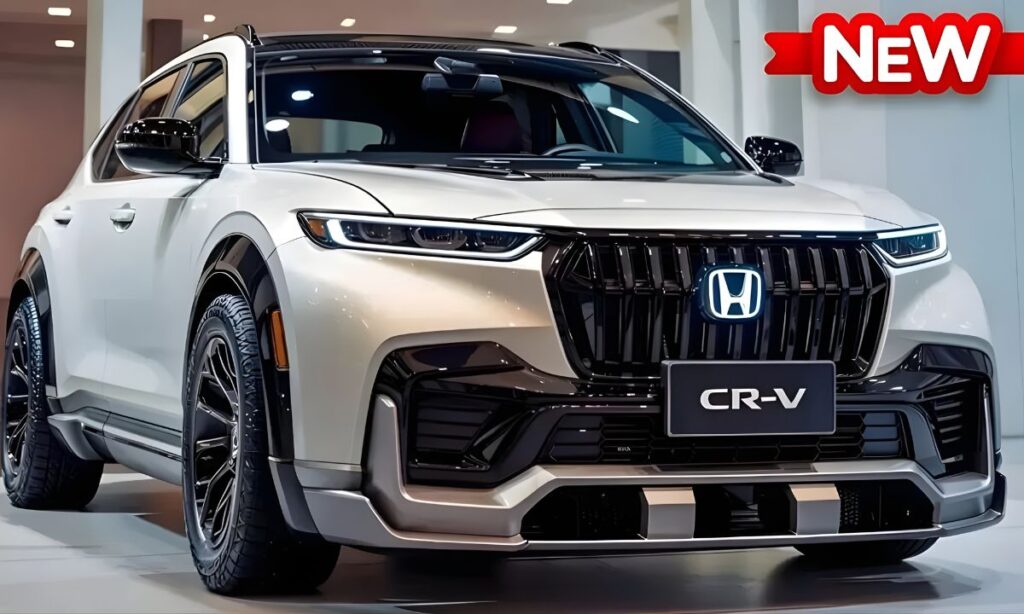
Honda CR-V 2025: The 2025 Honda CR-V refines what made the model successful: roomy packaging, efficient powertrains, and a calm ride — while adding meaningful tech and better interior materials in key trims. It is not the sportiest compact SUV, nor the cheapest; instead it pitches itself as a refined, low-stress daily driver that underpromises and overdelivers on comfort and utility.
Who this CR-V is best for
- Families and commuters who prioritize interior space, visibility, and reliable fuel economy.
- Buyers who want a modern infotainment and safety package without paying luxury-brand prices.
- Owners who value resale and predictable ownership costs over peak performance thrills.
One-line pros & cons
- Pros: Spacious cabin, smooth ride, strong fuel economy (especially hybrid), excellent safety features.
- Cons: Lacks engaging driving dynamics, top-tier trims get expensive, some rivals offer sharper styling or more premium interior design.
What’s genuinely new for 2025
Honda’s 2025 updates are evolutionary rather than revolutionary — targeted improvements that improve day-to-day ownership rather than headline-grabbing gimmicks.
Exterior and chassis tweaks that matter
For 2025, Honda focused on subtle design refinement: a slightly revised front fascia for cleaner airflow, new wheel designs that reduce road noise, and modest suspension tuning to improve ride comfort at low speeds. These changes aren’t dramatic visually, but they tighten NVH (noise/vibration/harshness) — which owners notice because it directly affects perceived quality.
Trim and packaging changes (including hybrid context)
Honda simplified option stacks and pushed higher-quality finishes into mid-level trims (e.g., upgraded soft-touch dash materials and standard heated front seats on many packages). The hybrid variants remain the headline for economy-focused shoppers; Honda continues to position hybrid powertrains as the default choice for those who want best-in-class mpg without a plug-in complexity.
Powertrains, performance and real-world efficiency
Understanding what the CR-V drives like requires separating marketing claims from everyday results.
Engine options explained
- Base turbocharged 1.5L (or similar): Delivers adequate midrange torque and better fuel economy than older naturally aspirated engines. It’s smooth at cruising speeds but shows turbo lag under heavy acceleration. Best for buyers wanting simple, efficient operation.
- Hybrid system: Combines a smaller gasoline engine with electric motors for stronger low-end responsiveness and superior city fuel economy. Real-world hybrid gains are most noticeable in stop-and-go traffic and in urban commutes.
AWD, handling, and towing — what owners actually experience
Honda’s AWD is front-bias with an on-demand rear coupling — it’s optimized for traction rather than sporty handling. Steering is weighted for comfort rather than feedback. The CR-V’s towing capacity is competitive for the segment but modest (suitable for small trailers or a pair of dirt bikes, not large boats). For drivers who prioritize cornering grip or precise steering, Mazda CX-5 is a better choice; for traction and winter confidence, CR-V’s AWD is dependable.
Fuel economy expectations (city / highway / combined)
Expect the hybrid to best the non-hybrid by a clear margin in city driving (often double-digit improvements in mpg). Highway fuel economy narrows between powertrains because gasoline engines can run efficiently at steady speeds. For budgeting, assume real-world combined figures will be 5–10% below manufacturer claims depending on driving style and climate.
Interior, cargo, infotainment and daily usability
CR-V’s cabin is its core selling point: purposeful, spacious, and now noticeably nicer in mid-range trims.
Space, ergonomics and materials (driver-first checks)
Legroom and headroom are among the segment’s top values. Front seats are designed for long-distance comfort with supportive bolstering and clear sightlines. Controls are logically placed — Honda avoided overcomplicating the centre stack. Material quality steps up by trim: base models keep practical plastics; EX+ and above use soft-touch surfaces and better stitching that compete with near-luxury rivals.
Infotainment, driver aids, and software polish
Honda offers a modern touchscreen with a quicker chipset in 2025 iterations. Expect wireless Apple CarPlay and Android Auto as standard on most trims. The vehicle’s software is competent but not class-leading; occasional minor lag or menu depth can be a nuisance, so check software version at delivery and ask dealers about OTA update schedules. Driver assists (adaptive cruise, lane keep, collision mitigation) are bundled as part of Honda Sensing — effective in routine use and generally consistent.
Cargo numbers, seats-down practicality, roof rails & active use cases
Cargo volume with seats up is industry-leading for many buyers: flat load floor, low liftover height, and easy seat release levers. Fold the rear seats and you get near-van levels of usable space for weekend gear, making it practical for active families, pet owners, or light contractors. Factory roof rails are useful; crossbars are typically dealer-installed options.
Safety, reliability, ownership costs and long-term value
Safety and ownership economics are pillars of the CR-V’s value proposition.
Active safety suite and crashworthiness summary
Honda Sensing includes adaptive cruise control, lane centering, automatic emergency braking, and traffic sign recognition. The CR-V has historically posted strong crash-test ratings; 2025’s structural improvements and expanded airbags preserve that trend. For families, the CR-V remains a top pick because its passive and active safety coverage is comprehensive at mainstream price points.
Scheduled maintenance, warranty and likely depreciation
Standard warranty coverage is industry-standard (limited and powertrain warranties). Maintenance intervals are predictable and inexpensive — oil, tires, brakes are straightforward and widely serviced. Historically, CR-Vs retain value well; depreciation is moderate compared to non-luxury rivals. Hybrid models can have slightly different resale curves — often stronger, because buyers prize fuel economy.
How it stacks up vs. Toyota RAV4, Mazda CX-5 and Hyundai Tucson
Compare in practical buyer language — where to choose CR-V and when to look elsewhere.
Strengths where CR-V wins
- Interior space & comfort: Better rear-seat room and cargo usability than many competitors.
- Fuel efficiency (hybrid): Among the best in real-world city driving.
- Ownership predictability: Lower cost of maintenance and strong resale history.
Weaknesses to watch
- Driving engagement: If you want sharp steering and a sporty chassis, Mazda CX-5 is more rewarding.
- Luxury feel at top trims: Some rivals deliver more premium materials or bolder designs in the same price band.
- Options pricing: Add-ons and higher trims can escalate the price quickly — know which features you actually need.
Buying guide: trims, optional extras, and negotiation levers
A practical roadmap to buying a CR-V without buyer’s remorse.
Best trim to buy for most buyers
The mid-level trim (often called EX-L or equivalent) typically hits the sweet spot: upgraded materials, essential tech (wireless Apple CarPlay/Android Auto, driver aids), and optional hybrid availability without paying for full leather or sunroof options. It balances value, comfort, and resale.
Options to skip and options worth paying for
- Skip: Premium paint colors, large alloy wheels (can worsen ride and mpg), and extended leather when you prefer cloth durability.
- Worth paying for: Hybrid powertrain (if you have a lot of city driving), advanced safety bundles if you frequently travel with family, and cold-weather packages (heated seats/steering wheel) in colder climates.
Negotiation levers: dealers often have stock of previous-year models with near-identical specs — use that to extract discounts. Financing incentives and dealer-arranged service packages can also be negotiated to lower total cost of ownership.
FAQs Honda CR-V 2025
Q : Is the 2025 Honda CR-V a hybrid?
Ans : Yes. The CR-V is offered with a hybrid powertrain in many markets, delivering the best city fuel economy and stronger low-end performance compared to the base turbo engine.
Q : What is the fuel economy of the 2025 CR-V hybrid?
Ans : Real-world combined fuel economy varies by driving habits, but expect the hybrid to outperform the petrol variant — typically in the mid- to high-40s mpg (US combined) under typical city-heavy conditions, with highway numbers closer to the upper 30s mpg.
Q : How much cargo space does the CR-V offer?
Ans : The CR-V leads its class for usable cargo with the rear seats up and folded. Expect a flat load floor and a large, regular-shaped cargo area suitable for strollers, luggage, and weekend gear.
Q : Is the CR-V reliable long term?
Ans : Historically, yes. Honda’s track record for reliability and low maintenance costs makes the CR-V one of the more dependable choices in the compact SUV segment.
Q : Which trim is the best value?
Ans : The mid-level trim (EX / EX-L equivalent) generally offers the best balance of equipment, interior quality and resale value without paying the premium for top-tier cosmetic upgrades.
Q : How does CR-V compare to Toyota RAV4?
Ans : CR-V typically offers more interior space and a smoother ride, while the RAV4 can provide a bolder exterior style and some powertrain options (including off-road variants) that appeal to different buyers.