I remember sitting on a rooftop in Vietnam, sipping a 50-cent iced coffee, watching the motorbikes swarm below like a river that never stops moving — and thinking, this is better than anything I’ve ever paid full price for.
That trip cost me less than $1,200 for three weeks. Hotels, food, transport, everything.
The truth is, the best budget travel destinations aren’t hidden secrets anymore — but knowing how to navigate them on a shoestring is still the difference between a transformative trip and a frustrating one. If you’re hunting for the cheapest countries to visit, the most affordable vacation spots, or just genuinely beautiful places where your dollar goes further than you expected, you’ve landed in exactly the right place.




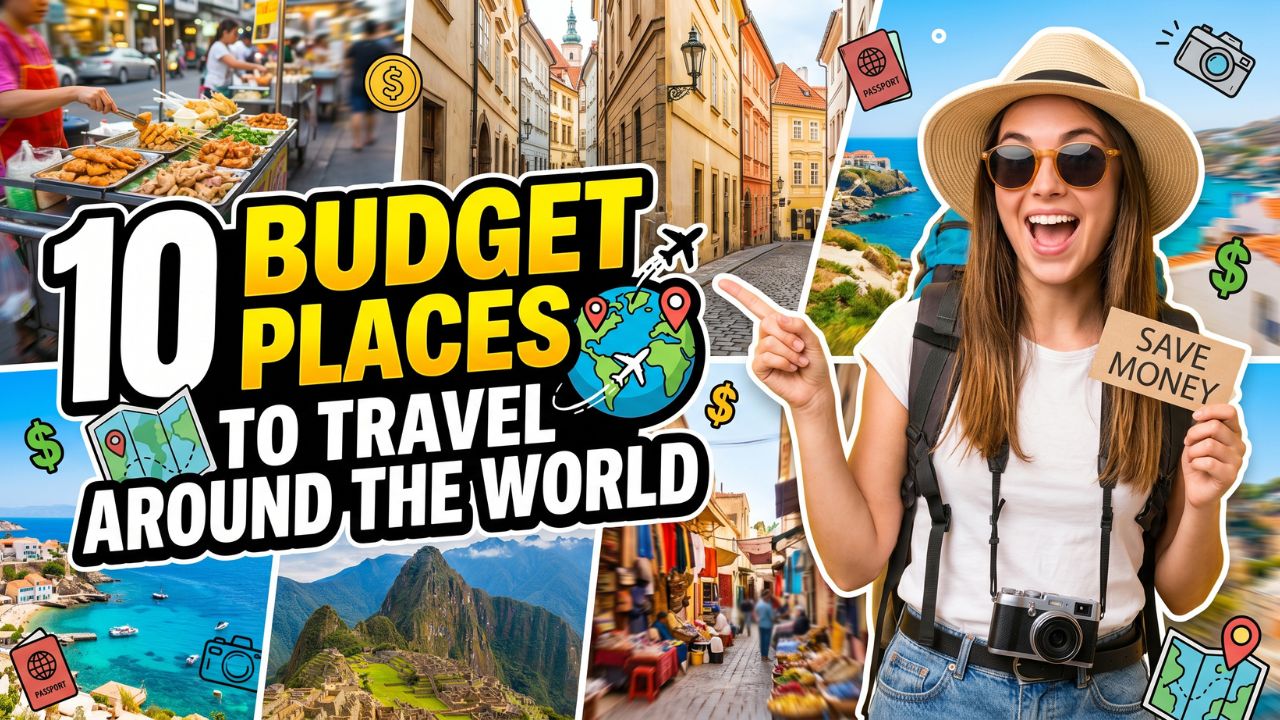
This guide covers 10 real, tested, wallet-friendly destinations across multiple continents — places where you can travel comfortably, eat brilliantly, and explore without counting every cent.
Let’s get into it.
Why Budget Travel Is Still the Most Honest Way to See the World
There’s a version of travel that costs $500 a night and keeps you in a bubble. You see the filtered version — the lobby, the curated tour, the restaurant that charges airport prices.
Budget travel forces you into the actual place. You eat where locals eat. You take the bus. You stumble into a neighborhood market because you can’t afford the fancy excursion and end up having the best afternoon of your trip.
I’m not romanticizing poverty travel or pretending discomfort is glamorous. These 10 cheap travel destinations offer real comfort, real food, and real experiences — just without the inflated price tags attached to more “branded” destinations.
Also worth noting: your money has real ethical weight. Spending it locally — at family guesthouses, street stalls, and independent guides — puts dollars directly into communities rather than international hotel chains. That matters.
Quick Facts: Budget Travel Overview
| Detail | Info |
|---|---|
| Currency Reference | USD (US Dollars) |
| Best Budget Regions | Southeast Asia, Eastern Europe, Central America, South Asia |
| Average Daily Budget | $25–$60/day depending on destination |
| Visa Requirements | Varies by country; check travel.state.gov |
| Travel Insurance | Always recommended, even budget trips |
| Best Booking Strategy | Flexible dates + mix of hostels/guesthouses |
Best Time to Visit Budget Destinations (General Seasonal Guide)
| Month/Season | Weather | Crowd Level | Best For |
|---|---|---|---|
| January–March | Dry season in SE Asia & Central America | Moderate | Beach destinations, temple visits, hiking |
| April–June | Shoulder season in Europe; hot in SE Asia | Low–Moderate | Eastern Europe cities, Indian subcontinent |
| July–September | Peak summer in Europe; monsoon in SE Asia | High in Europe, Low in Asia | Eastern Europe value travel, South America |
| October–December | Shoulder/dry season begins across many regions | Low–Moderate | Vietnam, Guatemala, Morocco, Nepal |
Top 10 Budget Places to Travel Around the World
1. Hanoi and Northern Vietnam — Southeast Asia’s Crown Jewel for Budget Travelers
Average daily budget: $25–$40
Vietnam consistently ranks as one of the best cheap travel destinations in the world, and Hanoi is where I’d tell every first-timer to start. The food alone is worth the flight.
A bowl of pho costs around $1.50 from a street vendor. A cold Bia Hoi (local draft beer) runs about 25 cents. A clean private room in the Old Quarter will run you $15–$25/night. You don’t need a six-figure salary to live well here.
What to do in Hanoi:
- Wander the 36 Streets of the Old Quarter on foot — each street historically sold one type of product, and many still do
- Visit Hoan Kiem Lake at dawn when locals are doing tai chi around the water
- Day trip to Ninh Binh (2.5 hours south by bus) for the Tam Coc caves — basically Ha Long Bay without the crowds or the price tag
- Take an overnight sleeper train north to Sapa for trekking through rice terraces — about $20 round trip
- Eat everything. Bun cha, banh mi, bánh cuốn, ca phe trung (egg coffee). You cannot go wrong.
The Hanoi Old Quarter is walkable, fascinating, and completely chaotic in the best way. The streets are narrow, the scooters are constant, and the energy never really stops.
One honest note: traffic is genuinely intense. Don’t freeze at intersections — move steadily and the motorbikes will flow around you. It feels terrifying for 10 minutes and then becomes second nature.
Getting around Vietnam: Buses and trains are your best friends. The Open Bus Ticket from Hanoi to Ho Chi Minh City (through Hue, Hoi An, Da Nang, Nha Trang) costs around $35–$45 total and is one of the great travel deals on earth.
2. Guatemala — Central America’s Most Rewarding Under-the-Radar Destination
Average daily budget: $35–$55
Most Americans fly over Guatemala on their way to more marketed destinations. That’s their loss and your gain.
Guatemala is one of the most affordable travel destinations in the Western Hemisphere, and it packs an almost unfair amount of beauty into a small country. Active volcanoes, colonial cities painted the color of birthday cake, the deepest lake in Central America, and one of the largest surviving indigenous cultures in the Americas.
Antigua, Guatemala is the main entry point for most travelers — a Spanish colonial city surrounded by three volcanoes, where $50/night gets you a boutique guesthouse with a flower-filled courtyard. Budget hostels run $8–$15/night.
What to do in Guatemala:
- Hike Volcán Acatenango overnight — camp on the ridge and watch Volcán de Fuego erupt at sunrise. This is genuinely one of the most dramatic natural experiences in the world. Budget around $35–$45 including guide, gear, and food.
- Spend several days at Lake Atitlán — arguably the most beautiful lake I’ve ever seen, surrounded by three volcanoes and indigenous Maya villages. Stay in San Marcos or San Pedro for budget accommodation ($10–$20/night).
- Visit the Chichicastenango Market on Thursday or Sunday — a massive indigenous market where you’ll find textiles, produce, incense, and traditions that have been running for centuries.
- Take a day trip to Tikal from Flores — the ancient Maya ruins rising out of jungle are legitimately jaw-dropping. Budget about $40–$60 for transport and entrance.
Food in Guatemala is cheap and filling. A plate of rice, beans, and chicken (the classic plato típico) runs $3–$5 at a local comedor. Street corn, tostadas, and chuchitos (small tamales) will keep you fed for almost nothing.
Guatemalan Spanish is considered some of the clearest in Latin America, making it a fantastic destination for anyone studying the language. Many travelers combine Spanish immersion schools (as cheap as $150/week for school plus homestay in Antigua) with their travels.
3. Portugal — Europe’s Most Affordable Western Country (And One of Its Most Beautiful)
Average daily budget: $60–$85
If you want to travel Europe without decimating your savings, Portugal is the answer the continent hasn’t fully admitted yet — though prices are climbing as more people discover it.
Lisbon and Porto are both genuinely stunning cities that still undercut Paris, Amsterdam, and Rome on nearly every metric. A glass of local wine at a Lisbon wine bar runs $3–$5. A pastel de nata (the famous custard tart) from Pastéis de Belém in Lisbon costs about $1.50. A night in a solid hostel or budget guesthouse in Alfama or Bairro Alto runs $30–$50.
What to do in Portugal:
- Explore Lisbon’s Alfama district on foot — the oldest neighborhood in the city, built on a hillside, full of fado music drifting from restaurants at night
- Take the 30-minute train from Lisbon to Sintra ($5 round trip) — a UNESCO World Heritage Site with palaces built into forested hillsides that look like they belong in a fairy tale
- Spend a few days in Porto — the riverfront Ribeira neighborhood, the azulejo tile-covered church facades, and the port wine caves in Vila Nova de Gaia (many offer free or cheap tastings)
- Take a budget bus or train to the Algarve coast for some of Europe’s best beaches — the dramatic limestone cliffs at Praia da Marinha and Benagil Cave are worth the trip south
- Day trip to Évora in the Alentejo region — a beautifully preserved walled city with a Roman temple in the center and the haunting Chapel of Bones (built with the remains of 5,000 monks)
Portugal also has an exceptional train network that’s very affordable by European standards. Lisbon to Porto by fast train runs around $25–$40. Local buses and the metro in Lisbon are both efficient and cheap.
Pro tip for Portugal: The neighborhood of Mouraria in Lisbon is even more local than Alfama and has less tourist foot traffic. The food spots here are smaller, cheaper, and often better.
4. Nepal — Where You Can Trek the Himalayas for Less Than You’d Expect
Average daily budget: $30–$50 (excluding trekking permits)
Nepal consistently shocks first-time visitors in two ways: how jaw-droppingly beautiful it is, and how little it costs to be there. Kathmandu is one of the most culturally dense cities in Asia — ancient temples, Buddhist stupas, incense smoke, and chaotic narrow streets all crammed together.
But Nepal’s real draw is what’s outside the cities. The Annapurna Circuit, the Langtang Valley, the Everest Base Camp trek — these are world-class hiking routes accessible to any reasonably fit person willing to invest time and a moderate amount of money.
What to do in Nepal:
- Visit Boudhanath Stupa in Kathmandu — the largest stupa in Nepal, ringed by Tibetan Buddhist monasteries, and genuinely one of the most peaceful places I’ve ever sat for an hour
- Explore the medieval city of Bhaktapur (a short taxi ride from Kathmandu) — better preserved than Kathmandu’s Durbar Square and far less crowded
- Trek the Poon Hill circuit — a 4–5 day trek that’s achievable for moderate hikers, with views of Annapurna and Dhaulagiri, costing around $200–$350 all-in (guides, permits, teahouse accommodation, meals)
- Spend a few days in Pokhara — Nepal’s second city, on a lakeside backed by Himalayan views, with budget guesthouses for $8–$20/night and excellent restaurants serving dal bhat (the Nepali national dish) for $3–$5
Trekking permits and TIMS (Trekkers’ Information Management System) cards are required and add $30–$50 to your budget depending on the route. These are non-negotiables and worth every cent — they go toward trail maintenance and rescue infrastructure.
Accommodation on treks: Nepal’s teahouse system is one of the most functional budget travel systems in the world. Small family-run lodges along trekking routes provide a bed (basic but clean) and meals. You’ll typically spend $5–$10/night on accommodation and $10–$15/day on food.
For health and vaccination guidance relevant to Nepal, including altitude sickness prevention and recommended immunizations, check the CDC Travelers’ Health page.
5. Morocco — Desert, Mountains, Medinas, and One of the World’s Great Food Cultures
Average daily budget: $40–$65
Morocco hits different than almost anywhere else. It’s an African country with Arab, Berber, and French influences all layered on top of each other — and the resulting culture, food, and architecture are unlike anything you’ll find anywhere else on earth.
Marrakech is the most visited city, but don’t stop there. The Fes el-Bali medina (the old city of Fes) is one of the most disorienting and extraordinary places in the world — a medieval city that’s been continuously inhabited for over 1,200 years, with no motorized vehicles allowed inside, full of leather tanneries, spice souks, and mosques that date to the 9th century.
What to do in Morocco:
- Get lost (intentionally) in the Fes el-Bali medina — it’s the world’s largest car-free urban area and a UNESCO World Heritage Site. Hire a local guide for the first morning ($10–$15) and then explore on your own
- Sleep in the Sahara Desert at Erg Chebbi near Merzouga — a camel trek into the dunes, a night in a desert camp under a sky full of stars, and sunrise over the desert the next morning. Budget around $60–$100 for the full experience including transport from Fes
- Visit Chefchaouen — the famous blue city in the Rif Mountains, where the buildings are painted every shade of blue. It’s even more beautiful in person, and much more peaceful than Marrakech
- Explore the Atlas Mountains — day hikes or multi-day treks near Imlil are affordable ($25–$40/day with guide and mule) and the Berber villages along the routes are incredibly welcoming
- Eat everything: tagine, harira soup, bastilla (sweet-savory pigeon pie), msemen (flatbread with honey), and the best mint tea of your life
Riads (traditional Moroccan courtyard guesthouses) in the medinas range from $20–$60/night and are dramatically more atmospheric than any hotel chain at twice the price.
Bargaining is expected in the souks, but start at roughly 40–50% of the asking price and work from there. Don’t feel pressured — walking away is a completely normal part of the process.
6. Albania — Europe’s Last Truly Undiscovered Budget Destination
Average daily budget: $40–$60
If you’ve never considered Albania for a vacation, you’re in good company — and that’s exactly why you should go now, before everyone else figures it out.
Albania has the Albanian Riviera, a stretch of Mediterranean coastline with turquoise water and near-empty beaches that rival Croatia and Greece but cost a fraction of the price. It has the Accursed Mountains (Bjeshkët e Namuna) in the north — one of Europe’s most dramatic mountain ranges with some of the best hiking on the continent. And it has Gjirokastër and Berat, two UNESCO-listed Ottoman stone cities that feel like time capsules.
What to do in Albania:
- Base yourself in Saranda for the Albanian Riviera — day trip to the ancient ruins of Butrint (a UNESCO site) and take a ferry across to the Greek island of Corfu for $20 round trip if you want to check off two countries in one day
- Hike the Valbona-to-Theth trail in the Accursed Mountains — a full-day hike through genuine wilderness that most Europeans have never heard of. Guides run $20–$30; guesthouses at each end are $15–$25/night
- Walk the 1,000 Steps up to Gjirokastër Castle and look out over the Ottoman city below — completely free
- Explore Berat, the “City of a Thousand Windows,” where Ottoman houses stack up a hillside overlooking a Byzantine castle. An extremely cheap but beautiful base for a couple of nights
- Try the food: byrek (savory pastry), tave kosi (lamb and yogurt casserole), fresh fish on the coast, and Albanian raki (fruit brandy) which costs almost nothing and is drunk with everything
Albania uses the Albanian Lek, but euros are widely accepted. The exchange rate works very favorably for American travelers with dollars.
7. Colombia — South America’s Most Exciting Comeback Story
Average daily budget: $45–$70
Colombia was a country I hesitated to visit for years based on an outdated reputation. That was a mistake I’m genuinely glad I eventually corrected.
Modern Colombia — especially Medellín, Cartagena, and the Coffee Region — is one of the most dynamic, welcoming, and affordable places to travel in the Western Hemisphere. The infrastructure has improved dramatically. The food is excellent. The people are among the warmest you’ll meet anywhere.
What to do in Colombia:
- Spend time in Medellín — once considered the world’s most dangerous city, now a genuine model of urban transformation. The Comunas (former favela neighborhoods) are accessible by the city’s famous outdoor escalators and cable cars, and local guides run community tours for $20–$30. The nightlife in El Poblado and Laureles is world-class.
- Explore Cartagena’s Walled City — a UNESCO-listed colonial city on the Caribbean coast, blazing with color, bougainvillea, and horse-drawn carriages. Stay just outside the walls in Getsemaní for better prices and more authentic neighborhood energy
- Visit the Cocora Valley near Salento in the Coffee Region — home to the tallest palm trees on earth (Colombia’s national tree, the wax palm) and surrounded by lush Andean cloud forest. Salento itself is a gorgeous small colonial town with excellent coffee for cents per cup
- Take the Ciudad Perdida trek (Lost City) from Santa Marta — a 4–6 day jungle trek to a pre-Columbian city older than Machu Picchu, discovered only in the 1970s. Budget around $350–$450 all-inclusive with authorized tour operators
- Take a boat along the Amazon River from Leticia — Colombia has a small slice of the Amazon that most people don’t know about, and it’s one of the most biodiverse places on the planet
A practical note on safety: Colombia’s security situation has improved significantly, but as with any destination, situational awareness matters. Stick to established neighborhoods, use registered taxis or apps like InDriver, and check the U.S. State Department Travel Advisory for current information before you go.
8. Georgia (the Country) — The Caucasus’s Perfectly Priced Hidden Gem
Average daily budget: $35–$55
Not the American state — the country. Tucked between Russia, Turkey, Armenia, and Azerbaijan on the edge of Europe and Asia, the Republic of Georgia is one of the most underrated budget travel destinations in the world.
Tbilisi, the capital, is a city unlike anything else — a blend of Eastern Orthodox churches, Soviet-era brutalist architecture, Persian-influenced bathhouses, and a thriving modern art and wine scene. And it’s cheap. A meal at a local Georgian restaurant — khachapuri (cheese bread), khinkali (soup dumplings), grilled meat, everything — runs $8–$15 for a full spread.
Georgia also claims to be the birthplace of wine (there’s archaeological evidence going back 8,000 years), and its natural orange wines from the Kakheti region are some of the most distinctive and affordable bottles you’ll find anywhere.
What to do in Georgia:
- Wander Tbilisi’s Old Town (Kala) — wooden balconies hanging over narrow streets, sulfur bathhouses you can soak in for $5–$10, and a hilltop fortress (Narikala) with views over the whole city
- Take a marshrutka (shared minivan) to Kazbegi near the Russian border — a 3-hour drive through stunning Caucasus mountain scenery to a village beneath the Gergeti Trinity Church, perched on a 2,170-meter ridge with Mount Kazbek behind it. Guesthouses run $15–$25/night.
- Spend time in the Kakheti wine region — wine tours and tastings at traditional wineries cost $10–$20 and include generous pours of wines you simply cannot find outside Georgia
- Day trip to the cave city of Uplistsikhe or the UNESCO-listed city of Mtskheta (Georgia’s ancient capital, 30 minutes from Tbilisi)
- Visit Svaneti in the far northwest — a remote mountain region with ancient defensive towers and trails through some of the most spectacular scenery in all of Europe
Georgia’s lack of visa requirements for American citizens (180-day visa-free stay) and its low cost of living make it almost absurdly practical for extended travel.
9. Indonesia (Bali and Beyond) — The Classic Budget Destination That Still Delivers
Average daily budget: $35–$60 in Bali; $20–$35 in other islands
Yes, Bali has been “discovered.” Yes, the Instagram crowds at certain rice terraces are real. But Indonesia has 17,000 islands — and the vast majority of them have seen almost no tourist development.
Even within Bali, knowing which neighborhoods to base yourself in makes an enormous difference. Canggu and Seminyak are pricier and more touristy. Ubud (Bali’s cultural center in the rice terrace highlands) hits the sweet spot between accessibility and authenticity. Amed on the east coast is even more laid-back and cheaper.
What to do in Indonesia:
- Rent a scooter in Ubud ($5–$8/day) and spend a morning riding the quiet roads through rice terraces before the tour buses arrive — the Tegallalang Rice Terraces are beautiful, but Jatiluwih (a UNESCO site further west) is less crowded and arguably more impressive
- Take the fast boat to Nusa Penida for a day — the cliffs, the famous Kelingking Beach, and the underwater visibility for snorkeling are extraordinary. Budget $30–$40 for the day including transport and snorkel gear rental
- Go island hopping through the Gili Islands (off Lombok’s coast) — car-free tropical islands with hammocks, snorkeling with sea turtles, and a genuinely relaxed pace. Budget guesthouses run $15–$30/night.
- Visit Komodo National Park from Labuan Bajo (Flores island) — the Komodo dragons are one of the world’s great wildlife experiences. Liveaboard boat tours run $60–$120/day all-inclusive.
- Climb Mount Bromo in East Java — a pre-dawn hike to a volcanic crater rim at sunrise, with a sea of clouds below and multiple active volcanoes visible in every direction. This is one of the most arresting natural sights I’ve ever witnessed, and it costs about $20–$30 all-in.
Indonesian food is consistently excellent and cheap. Nasi goreng (fried rice), mie goreng (fried noodles), gado-gado (peanut sauce salad), satay, babi guling (roast pork, Bali-specific) — all run $1–$4 at local warungs (small family restaurants).
10. Poland — Eastern Europe’s Most Underrated City-Break Destination
Average daily budget: $50–$75
Poland is one of those destinations that American travelers consistently overlook in favor of its more famous neighbors — France, Italy, Spain — and consistently miss out as a result. It shouldn’t be overlooked.
Kraków is one of the best-preserved medieval city centers in Europe, having emerged from World War II largely intact when most of the continent’s historic cores were leveled. It’s packed with museums, excellent restaurants, jazz bars in 12th-century cellars, and one of the most beautiful central market squares (the Rynek Główny) in the world — and it costs about 40% of what you’d pay for an equivalent experience in Prague or Vienna.
What to do in Poland:
- Spend a morning at Wawel Castle and Cathedral on Wawel Hill overlooking the Vistula River — the historic seat of Polish kings and a stunning complex of architecture spanning nearly a thousand years
- Visit Auschwitz-Birkenau Memorial and Museum near Oświęcim, 90 minutes from Kraków — a profoundly important and deeply moving experience that every traveler in this part of Europe should make time for. Free entry (timed tickets required in advance).
- Walk the Old Town and Jewish Quarter (Kazimierz) in Kraków — the Jewish Quarter is now one of the hippest neighborhoods in the city, full of vintage cafes, street art, klezmer music, and excellent food
- Day trip to the Wieliczka Salt Mine just outside Kraków — a UNESCO World Heritage Site with underground chambers, chapels, and even a cathedral carved entirely from salt. Admission is about $20.
- Take the train to Warsaw (2.5 hours, about $15–$25) — the Polish capital is a fascinating mix of reconstructed Old Town (rebuilt brick by brick after being 85% destroyed in WWII), Soviet-era Palace of Culture, and a booming modern city with excellent museums
Poland’s food is hearty, cheap, and delicious. Pierogi (dumplings), żurek (sour rye soup), bigos (hunter’s stew), kielbasa, and placki ziemniaczane (potato pancakes) at a traditional bar mleczny (milk bar — a Soviet-era canteen) will fill you up for $4–$8.
The Polish złoty is the currency, and exchange rates from USD are favorable. ATMs are widely available, and most restaurants accept cards.
Where To Stay, Eat, and Get Around on a Global Budget
Accommodation strategies that actually work:
- Hostels aren’t just for 22-year-olds. Private rooms in well-run hostels in SE Asia, Eastern Europe, and Central America range from $15–$35/night and are often cleaner and better-located than budget hotels.
- Guesthouses and family-run pensions in places like Nepal, Morocco, Albania, and Georgia consistently outperform chains at every price point under $60/night.
- Booking.com and Hostelworld are your workhorses. For some destinations (Vietnam, Indonesia), walking in off the street can get you better rates than online booking — especially outside peak season.
Eating on a budget globally:
The single best rule: eat where you see locals eating at lunch. Markets, street stalls, and small family restaurants near bus stations and local neighborhoods almost always offer better food at lower prices than anything near a tourist attraction.
Getting around cheaply:
- Overnight trains and buses save you one night of accommodation while moving you between destinations — a brilliant double-value option in places like Vietnam, Poland, Morocco, and India.
- Shared minivans (marshrutkas, songthaews, etc.) are the local transport backbone of most developing-world destinations and cost a fraction of private taxis.
- Budget airlines like Wizz Air (Eastern Europe), AirAsia (SE Asia), and VivaAerobus (Central America) can dramatically reduce overland travel time if you’re flexible on dates.
Pro Tips and Common Tourist Mistakes To Avoid
After years of budget travel across multiple continents, here are the things I wish someone had told me earlier:
- Don’t book everything in advance. Flexibility almost always saves money. The exception: flights, Auschwitz tickets, and any overnight trekking permits that have capacity limits.
- Exchange money at banks or licensed exchange offices, never at airports. Airport rates are typically 10–15% worse than market rate.
- Always carry some small local currency. Street food, local buses, and small guesthouses in rural areas often don’t take cards.
- Travel in shoulder season. The month just before or after peak season often gives you 80% of the best weather with 50% fewer crowds and noticeably lower prices on accommodation.
- Travel insurance is not optional. A single medical evacuation from Nepal or Indonesia can cost $50,000–$100,000. World Nomads and Safety Wing both offer strong budget traveler policies starting around $40–$60/month.
- Learn 10 words in the local language. Hello, thank you, how much, please, sorry — in the local language — changes how people interact with you dramatically.
Budget Breakdown and What To Actually Expect To Spend
Here’s an honest daily budget estimate for each destination, covering accommodation, food, local transport, and activities (not including international flights):
| Destination | Budget/Day (USD) | Budget Accommodation | Budget Meal |
|---|---|---|---|
| Vietnam | $25–$40 | $15–$25 (private room) | $1.50–$4 |
| Guatemala | $35–$55 | $8–$20 (hostel/guesthouse) | $3–$6 |
| Portugal | $60–$85 | $30–$55 (hostel/pension) | $6–$12 |
| Nepal | $30–$50 | $8–$20 (teahouse/guesthouse) | $3–$6 |
| Morocco | $40–$65 | $20–$45 (riad/hostel) | $4–$9 |
| Albania | $40–$60 | $15–$30 (guesthouse) | $4–$8 |
| Colombia | $45–$70 | $12–$30 (hostel/pension) | $4–$10 |
| Georgia | $35–$55 | $15–$25 (guesthouse) | $4–$10 |
| Indonesia | $35–$60 | $15–$30 (guesthouse/hostel) | $1.50–$5 |
| Poland | $50–$75 | $20–$40 (hostel/pension) | $5–$10 |
International flights from the US are the biggest variable. From the East Coast, Europe and Morocco are often the cheapest targets ($400–$700 round trip). From the West Coast, SE Asia and Indonesia can be found for $600–$900 with flexible dates. Central America is usually the cheapest overall ($250–$450 from most US cities).
Google Flights’ “Explore” map feature — where you leave the destination blank and it shows you the cheapest places to fly to on your dates — is one of the most useful free travel tools ever built.
How To Plan Your Itinerary: Sample Budget Trip Structures
2 weeks in Southeast Asia (first-timer):
- Days 1–4: Hanoi, Vietnam (Old Quarter, Hoan Kiem Lake, day trip to Ninh Binh)
- Days 5–7: Hue or Hoi An (train south, beach time, ancient town)
- Days 8–11: Ho Chi Minh City to Mekong Delta
- Days 12–14: Fly to Bali, Indonesia for final days at the beach
3 weeks in Eastern Europe (budget):
- Days 1–5: Kraków, Poland (Old Town, Auschwitz, Wieliczka)
- Days 6–9: Warsaw, Poland (day train; city museums, Old Town)
- Days 10–14: Tbilisi, Georgia (fly from Warsaw; Old Town, bathhouses, day trip to Mtskheta)
- Days 15–19: Kazbegi, Georgia (mountains, hiking, guesthouses)
- Days 20–21: Return to Tbilisi for flight home
10 days in Central America (adventure):
- Days 1–3: Guatemala City arrival, transfer to Antigua (Spanish immersion + volcano hike)
- Days 4–6: Lake Atitlán (San Marcos or San Pedro village, kayaking, hiking)
- Days 7–9: Flores/Tikal day trip (Maya ruins)
- Day 10: Return to Guatemala City for flight home
10 Budget Places to Travel Around the World FAQ
Reference Links
For current US government travel advisories on all destinations covered in this guide, visit the official U.S. Department of State Travel Advisory page.
For destination-specific health guidance, recommended vaccinations, and current health alerts, visit the CDC Travelers’ Health page before any international trip.
Final Thoughts: The Best Budget Travel Is About Saying Yes to the Unexpected
Every single destination on this list has given me something I didn’t plan for and couldn’t have manufactured. An invitation to a Georgian family’s table. Getting caught in a monsoon with a group of strangers in Hoi An and laughing about it over Vietnamese whiskey. Watching the sun move across the Kraków Rynek from a bench, with a bag of obwarzanek (pretzel rings) and no agenda.
The best cheap travel destinations aren’t cheap in any meaningful way. They’re just honest. They trade luxury packaging for the real thing — actual food, actual culture, actual human connection.
Your dollar goes further in these places. More importantly, your experience goes deeper.
Which of these destinations has been on your list longest? Let me know in the comments — I’d genuinely love to hear which one you’re planning first.