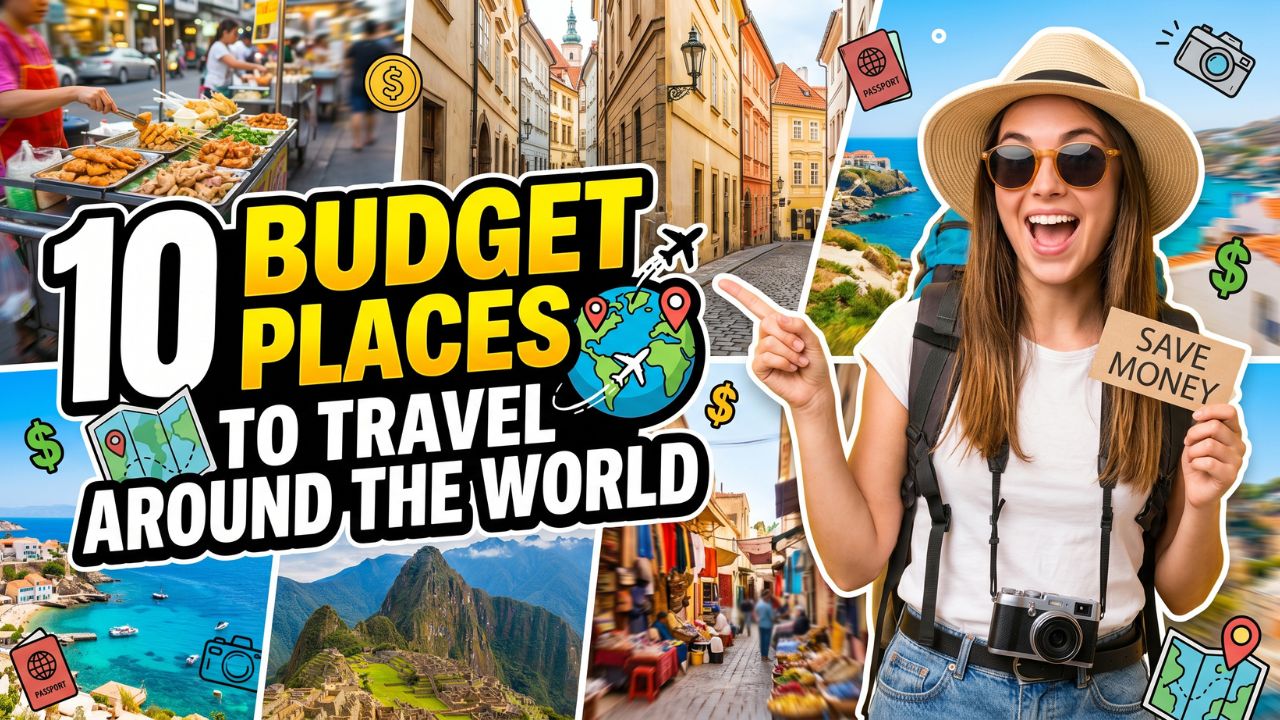
Cheapest countries to visit in Europe 2026 – Honestly, I used to think Europe was off-limits on a budget. I’d scroll through those dreamy Instagram photos of Swiss Alps and Parisian cafés and immediately close the tab because my wallet couldn’t handle the conversation. Then a friend who travels full-time on a teacher’s salary told me something that changed everything: “You’re looking at the wrong part of the map.”
She was right. The cheapest countries to visit in Europe aren’t the ones on magazine covers — they’re the ones that quietly blow your mind and leave your bank account intact. I’ve spent the last few years crisscrossing from Portugal’s sun-drenched coast to Albania’s wild mountains to Bulgaria’s cobblestone medieval towns, and I’m here to tell you that budget travel in Europe in 2026 is not only possible — it’s genuinely incredible.
This guide is for Americans who want the full European experience without the full European price tag. Real costs. Real neighborhoods. Real mistakes I made so you don’t have to.




Why These Cheapest Countries in Europe Completely Changed My Perspective on Travel
I remember landing in Lisbon for the first time and bracing myself for sticker shock. It never came. Lunch at a tasca (local tavern) ran me about $8 for a full meal with wine. A metro ticket was under $1.75. A hostel bed in a great central neighborhood cost less than one cocktail in New York City.
That moment cracked something open in me. I started digging deeper — researching the Eastern bloc, the Balkans, the forgotten corners of the Mediterranean. What I found was a patchwork of countries where American dollars stretch so far it almost feels irresponsible.
In 2026, a few things have shifted the budget travel landscape. The post-pandemic travel boom has cooled slightly in Western Europe, but prices in popular spots like Barcelona and Amsterdam remain high. Meanwhile, the Balkans are having their moment. Albania has quietly gone from backpacker obscurity to one of the most talked-about destinations in travel communities. North Macedonia, Moldova, and Kosovo are seeing upticks in tourism but haven’t yet adjusted their prices to match demand. The window is open — but it won’t stay that way forever.
For Americans specifically, the dollar is holding reasonably well against several Eastern European currencies, which means your purchasing power is real. This isn’t about roughing it in dingy hostels. It’s about trading a week in overpriced Prague or Copenhagen for two weeks in Sofia or Tbilisi and coming home with more stories, more meals, more experiences, and more cash than you started with.
Quick Facts at a Glance
| Feature | Details |
|---|---|
| Region | Europe (Eastern, Southern, Balkans) |
| Best Value Currencies | Albanian Lek, Georgian Lari, Bulgarian Lev, Romanian Leu |
| US Visa Requirements | Most countries: visa-free for 90 days (Schengen zone applies) |
| Average Daily Budget | $35–$80 USD depending on country |
| Best Trip Length | 3–5 weeks to hit multiple countries |
| Peak Season | June–August |
| Best Value Season | April–May, September–October |
| Payment | Cash preferred in rural areas; cards widely accepted in cities |
Best Time to Visit the Cheapest European Countries
| Month / Season | Weather | Crowd Level | Best For |
|---|---|---|---|
| January–February | Cold, some snow (especially Balkans) | Very Low | Budget hostels, ski deals, local culture |
| March–April | Mild, green, occasional rain | Low–Medium | Hiking, sightseeing, shoulder prices |
| May–June | Warm, comfortable | Medium | Best overall balance of weather and cost |
| July–August | Hot, especially south | High | Beaches, festivals, outdoor events |
| September–October | Still warm, fewer crowds | Low–Medium | Best time overall — great weather, lower prices |
| November–December | Cool to cold, festive | Low | Christmas markets, city breaks, rock-bottom rates |
My personal sweet spot? Late September through mid-October. The crowds have thinned noticeably, accommodation prices drop by 20–40%, and the light across the Adriatic or the Romanian countryside is the kind of thing that makes you understand why painters kept coming back to Europe for centuries.
The Top Cheapest Countries to Visit in Europe in 2026
Here are the countries where your money genuinely goes the furthest — not just a little bit, but dramatically so compared to Western Europe.
1. Albania — Europe’s Most Underrated Budget Gem
Albania is the one that’s been on every budget traveler’s radar lately, and for good reason. The Albanian Riviera has beaches that rival Croatia’s — crystal clear Ionian water, dramatic cliffs, fishing villages — at a fraction of the price.
Where to go: Saranda is the main beach hub and a great base. The ancient ruins of Butrint are a UNESCO World Heritage Site literally minutes away. Head north to Gjirokastër for an Ottoman-era stone city that looks like something out of a fairy tale.
What it costs: Expect to spend $30–$50 per day. A full sit-down dinner with drinks runs $8–$12. Budget accommodation in Saranda or Tirana ranges from $15–$30 per night for a private room.
The catch: Infrastructure is improving but not perfect. Roads in rural areas can be rough, and English is less common outside tourist zones. Go with patience and it rewards you tenfold.
2. Bulgaria — Medieval Towns, Mountain Trails, and Cheap Everything
Sofia is one of the most affordable capitals in all of Europe, and Bulgaria as a whole punches well above its weight. The country has the Rhodope Mountains for hiking, the Black Sea coast for beaches, and the Valley of Roses for something you simply won’t see anywhere else.
Where to go: Sofia’s Vitosha Mountain is literally walkable from the city center — a free hike with views that would cost you a guided tour fee in Switzerland. Plovdiv is one of Europe’s oldest cities and a cultural powerhouse with a thriving arts scene. Veliko Tarnovo perches dramatically above a river gorge and is one of the most photogenic towns I’ve ever stumbled into.
What it costs: $35–$55 per day covers accommodation, food, transport, and activities comfortably. A meal at a mehana (traditional Bulgarian tavern) costs $6–$10 including drinks.
Don’t miss: The Rila Monastery, about two hours from Sofia, is one of the most spectacular religious complexes in Eastern Europe and costs almost nothing to visit.
3. Romania — Transylvania is Real and It’s Jaw-Dropping
Romania gets written off by people who’ve never been, and those people are missing out on one of Europe’s most diverse and spectacular destinations. Transylvania isn’t a Halloween myth — it’s a real region with real castles, real medieval fortified churches, and real countryside that looks like it was designed for a fantasy novel.
Where to go: Brasov is your base for Transylvania. Bran Castle (yes, that castle) is a short trip away. Sighisoara is a UNESCO-listed medieval citadel that is impeccably preserved. Bucharest is chaotic and energetic and has one of the best nightlife scenes in Eastern Europe.
What it costs: $40–$65 per day. Accommodation in Brasov is remarkably affordable — nice guesthouses run $25–$40 per night. Local food is hearty and cheap; a bowl of ciorbă (sour soup) and a main dish runs about $5–$7.
Pro tip: Rent a car for at least two days to drive through the Transylvanian countryside. The Transfăgărășan Highway, open in summer, is one of the most dramatic mountain roads in the world. Gas is cheaper than in most of Western Europe, and the drive is absolutely worth it.
4. North Macedonia — The Balkans’ Best-Kept Secret
I’d be surprised if one in ten Americans can point to North Macedonia on a map. It’s tiny, landlocked, and utterly overlooked — which is exactly why you should go now, before the crowds catch on. Ohrid, sitting on the edge of one of Europe’s oldest and deepest lakes, is the crown jewel. The old town is a maze of Byzantine churches, medieval fortresses, and pebble beaches on water so clear it looks photoshopped.
Where to go: Ohrid is the main draw and deserves at least 3–4 days. Skopje, the capital, is a bizarre and entertaining blend of Ottoman bazaars and over-the-top neoclassical statues — it’s campy and strange and genuinely worth a day or two.
What it costs: $30–$50 per day. One of the cheapest countries in Europe, full stop. A private room near the lake in Ohrid can be as little as $20. A full dinner with wine costs $10–$15.
5. Georgia — Technically Transcaucasia, Completely Worth It
Okay, geography purists will note that Georgia sits at the crossroads of Europe and Asia rather than squarely in Europe. But it’s in the Council of Europe, visa-free for Americans, and every budget travel community I’ve been part of treats it as an honorary European destination. More importantly, it might be the single best value destination for an American traveler in 2026.
Where to go: Tbilisi is one of the most architecturally wild cities I’ve ever visited — carved wooden balconies, a ruined castle above the old town, sulfur baths that cost a few dollars, wine bars in vaulted brick cellars. The wine regions of Kakheti are an hour’s drive east. The Kazbegi mountains, with the iconic Gergeti Trinity Church perched above the clouds at 7,000 feet, are one of the most dramatic landscapes on Earth.
What it costs: $30–$55 per day. Georgia’s wine culture is ancient and world-class, and a bottle of excellent local wine at dinner costs $5–$8. Accommodation in Tbilisi’s old town runs $20–$40 for a private room in a good guesthouse.
The food alone is worth the flight. Khachapuri (cheese bread) and khinkali (soup dumplings) are comfort food on a cosmic level.
6. Montenegro — Adriatic Beauty at Balkan Prices
Montenegro is the kind of country that makes you feel like you’ve stumbled into the Mediterranean by accident. The Bay of Kotor is a fjord-like inlet lined with Venetian architecture and medieval towns, with mountains rising dramatically above it. Kotor’s old town is one of the best-preserved in the entire Adriatic region.
Where to go: Kotor for the bay and the old town — the walls above the city take about an hour to climb and the view is worth every step. Budva is the beach party hub, livelier and cheaper than Croatia’s coast. The Durmitor National Park in the north is where hikers go to disappear for a few days.
What it costs: $45–$75 per day, slightly higher in peak season near the coast. Still significantly cheaper than Croatia, which sits just across the water.
7. Kosovo — Europe’s Youngest Country and One of Its Cheapest
Kosovo declared independence in 2008 and is the youngest country in Europe. It’s also barely on the tourist radar, which means prices are low, locals are genuinely excited to meet foreign visitors, and you feel like you’re somewhere truly off the beaten path.
Where to go: Pristina, the capital, is raw and modern and unlike any European capital I’ve visited — no grand old town, but a genuine energy and a café culture that punches above its size. Prizren is the real gem: an Ottoman-era town with a hilltop fortress, a mosque-lined river, and the best çevapi (grilled meat) I’ve ever eaten.
What it costs: $25–$45 per day. The cheapest country in Europe by most measures. A meal at a local restaurant costs $4–$8. Beer runs about $1.50–$2. Accommodation is limited but affordable — expect $20–$35 for a private room.
Note on travel: Check the US State Department’s travel advisory at travel.state.gov before visiting, as entry rules involving Serbia’s border can occasionally be complex for international travelers.
8. Moldova — Europe’s Most Forgotten Country
Moldova sits between Romania and Ukraine and gets essentially zero tourist attention, which makes it fascinating. It’s the poorest country in Europe by GDP, which directly translates to the lowest prices you’ll find anywhere on the continent. But don’t let that fool you: the wine culture here is extraordinary.
Where to go: Chișinău, the capital, is scrappy and honest and has a genuinely warm local bar and café scene. Orheiul Vechi is a dramatic cave monastery complex carved into cliffs above a river that very few tourists ever visit. The real reason to come, though: Cricova and Mileștii Mici wineries, two of the world’s largest wine cellars, where you can take underground wine tours and taste world-class Moldovan wines for almost nothing.
What it costs: $25–$40 per day. Genuinely the cheapest country in Europe. Wine that would cost $30 in the US costs $5 here. A restaurant meal runs $4–$7.
9. Portugal — The Best Value in Western Europe
Portugal is where budget travel meets Western European standards — and it’s the only country on this list that sits firmly in Western Europe while still offering genuinely affordable travel. It’s more expensive than the Balkans, but compared to Spain, France, or Italy? Portugal is a bargain.
Where to go: Lisbon is the obvious start — a hilly city of azulejo tile, fado music, and pastel de nata (custard tarts that are worth the flight alone). Porto in the north is cozier, with wine caves along the Douro River and one of Europe’s best food markets. The Alentejo region offers slow travel through cork forests, ancient hilltop villages, and some of the best value wine in Europe.
What it costs: $60–$90 per day in Lisbon; cheaper in Porto and significantly cheaper in the interior. A francesinha sandwich (Porto’s famous guilty pleasure) costs $6–$10. A full dinner with Portuguese wine runs $15–$20 per person.
Don’t miss: The Douro Valley wine region, reachable by train from Porto, is one of the most beautiful landscapes in Europe and costs almost nothing to explore independently.
10. Serbia — Belgrade’s Nightlife, Mountains, and Medieval Monasteries
Serbia flies completely under the American tourist radar, and I genuinely cannot understand why. Belgrade is one of the most dynamic capitals in Europe — a city that parties harder than almost anywhere else, has a stunning riverside fortress, and feeds you exceptionally well for almost no money.
Where to go: Belgrade’s Kalemegdan Fortress overlooks the confluence of the Sava and Danube rivers from a dramatic hilltop and is completely free to enter. The Skadarlija bohemian quarter is where the old city lives — kafanas (traditional taverns) serving rakija (fruit brandy) and grilled meats on cobblestone streets. Novi Sad is an easy day trip and hosts the famous EXIT music festival every summer.
What it costs: $35–$60 per day. Belgrade is genuinely affordable even by Balkan standards. A full kafana dinner with drinks is $10–$15. Accommodation in a central apartment or guesthouse runs $25–$45.
11. Bosnia and Herzegovina — Mostar Is Worth Every Cent
Mostar’s Stari Most (Old Bridge) might be the single most beautiful thing I’ve seen in the Balkans. The arched stone bridge over the Neretva River, surrounded by Ottoman architecture, mountain air, and the sound of the call to prayer — it’s the kind of moment that stays with you.
Where to go: Mostar is the main draw and deserves at least two full days. Sarajevo is an hour away by bus and is one of Europe’s most culturally layered cities — the only major European city with a mosque, Catholic church, Orthodox church, and synagogue all within a few minutes’ walk of each other.
What it costs: $35–$55 per day. Budget accommodation in Mostar or Sarajevo runs $20–$35 for a private room. A burek (flaky meat or cheese pastry) costs less than $2 and is one of the best breakfasts in the world.
12. Poland — History, Pierogis, and Prices That Shock Westerners
Poland is technically in Central Europe and is a European Union member with a relatively strong economy, but it remains dramatically cheaper than Germany, Austria, or Scandinavia. Kraków especially is one of Europe’s best city-trip destinations at a genuinely affordable price.
Where to go: Kraków’s Old Town is one of the best-preserved medieval city centers in Europe, and the Wawel Castle looming above the Vistula River is magnificent. Warsaw has reinvented itself into a vibrant, modern capital while preserving its meticulously rebuilt old town. Gdańsk on the Baltic coast is a gorgeous Hanseatic city that most Americans overlook entirely.
What it costs: $50–$75 per day. A plate of pierogi runs $4–$7. A craft beer in Kraków’s old town costs $2.50–$4. A private room in a great central location runs $30–$50.
What you don’t expect: The food and craft beer scene in Poland has exploded in the last five years. Kraków now has dozens of excellent craft breweries and farm-to-table restaurants that charge a fraction of what similar experiences cost in Western Europe.
Where to Stay, Eat, and Get Around in Europe’s Budget Destinations
Accommodation: In the Balkans and Eastern Europe, boutique guesthouses and family-run B&Bs are almost always better value than chain hotels. Use Booking.com and Airbnb to find them, but don’t ignore direct booking — many small places give you a better rate if you email them directly. Hostels remain excellent value for solo travelers; beds in quality hostels run $12–$20 across most of these countries.
Food: The best meals in budget Europe are always where the locals eat. Markets, street food stalls, and neighborhood restaurants without English menus are your friends. Budget $8–$15 per day on food in most Balkan and Eastern European destinations.
Getting Around:
- FlixBus and Eurolines connect most major cities across Eastern Europe cheaply
- Night trains between cities save you a night’s accommodation
- BlaBlaCar (ridesharing) is widely used in Eastern Europe and incredibly cheap
- Budget airlines like Wizz Air and Ryanair serve regional airports at low fares
- Renting a car opens up rural areas that public transport doesn’t reach
Pro Tips and Common Tourist Mistakes to Avoid
1. Don’t skip travel insurance. I know it feels like an unnecessary cost when you’re trying to travel cheap. It isn’t. For Americans traveling in Europe, a one-month policy typically runs $40–$80 and covers medical emergencies, cancellations, and theft. It’s the smartest $60 you’ll spend. Check the CDC’s travel health guidance at wwwnc.cdc.gov/travel for destination-specific vaccination recommendations before you go.
2. Don’t assume card payments work everywhere. In rural Albania, rural Bosnia, and rural Moldova, cash is king. Always carry some local currency.
3. Don’t ignore the Balkans because you’ve never heard of them. I’ve met more Americans who’ve been to Paris four times than have been to Albania once. That math doesn’t work in your favor anymore.
4. Don’t book only hotels. Private rooms through local guesthouses and B&Bs often cost the same as a hostel bed but give you a private space and usually breakfast included.
5. Don’t travel the entire continent in two weeks. Pick a region. The Western Balkans (Albania, Kosovo, North Macedonia, Montenegro, Bosnia) can be done beautifully in 3–4 weeks as a circuit. You’ll go deeper, spend less on transport, and actually understand where you are.
6. Do learn five words in the local language. “Hello,” “thank you,” “please,” “excuse me,” and “do you speak English?” in whatever language applies. In the Balkans especially, this tiny effort gets a disproportionate response of warmth and helpfulness from locals.
What’s the biggest mistake you made on your first European budget trip? Drop it in the comments — I’d genuinely love to learn from your experience.
Budget Breakdown: What to Actually Expect to Spend Per Day
| Country | Budget Traveler | Mid-Range | Comfortable |
|---|---|---|---|
| Kosovo | $25–$35 | $40–$60 | $70–$100 |
| Moldova | $25–$40 | $45–$65 | $75–$110 |
| Albania | $30–$50 | $55–$80 | $90–$130 |
| North Macedonia | $30–$50 | $55–$75 | $85–$120 |
| Georgia | $30–$55 | $60–$90 | $100–$150 |
| Bulgaria | $35–$55 | $60–$90 | $100–$150 |
| Romania | $40–$65 | $70–$100 | $120–$175 |
| Bosnia | $35–$55 | $65–$90 | $100–$145 |
| Serbia | $35–$60 | $65–$95 | $110–$160 |
| Montenegro | $45–$75 | $80–$120 | $140–$200 |
| Poland | $50–$75 | $85–$120 | $140–$200 |
| Portugal | $60–$90 | $100–$150 | $160–$230 |
Estimates include accommodation, food, local transport, and one or two paid activities per day. Based on 2026 conditions.
How to Plan Your Itinerary Through Europe’s Budget Destinations
Option 1: The Balkans Circuit (3–4 weeks, fly in/out of Tirana or Skopje)
Week 1: Tirana → Berat → Gjirokastër → Albanian Riviera (Saranda, Himara) Week 2: Podgorica → Kotor → Budva → Dubrovnik (Croatia, slightly pricier but unmissable) Week 3: Sarajevo → Mostar → Split (day trip) → back to Sarajevo Week 4: Ohrid (North Macedonia) → Skopje → Pristina (Kosovo) → fly home
Estimated total cost: $1,800–$2,800 for a solo traveler including flights from the US
Option 2: Eastern Europe Deep Dive (3 weeks, fly in/out of Bucharest or Sofia)
Days 1–5: Bucharest → Brasov → Sighisoara → Sibiu (Romania) Days 6–9: Sofia → Plovdiv → Veliko Tarnovo (Bulgaria) Days 10–14: Skopje → Ohrid (North Macedonia) Days 15–21: Tbilisi → Kazbegi → Kakheti wine region (Georgia)
Estimated total cost: $1,600–$2,400 for a solo traveler including flights
Option 3: Western Europe on a Budget (2 weeks, fly into Lisbon)
Days 1–5: Lisbon → Sintra → Setúbal Peninsula (Portugal) Days 6–10: Porto → Douro Valley (Portugal) Days 11–14: Kraków → Warsaw (Poland, budget flight from Porto via Ryanair)
Estimated total cost: $1,500–$2,200 for a solo traveler including flights
Day-by-day tip: Give yourself at least one unscheduled “wandering day” per week. Some of my best travel memories happened because I had no plan and just followed an interesting street or a local’s offhand recommendation. Budget travel works best when it’s not frantic.
Are you more of a structured-itinerary traveler or a spontaneous wanderer? Tell me in the comments — I’m genuinely curious whether this changes how people experience cheap travel in Europe.
Frequently Asked Questions
Real questions Americans search before booking a budget Europe trip — answered straight.
What is the absolute cheapest country to visit in Europe in 2026?
▼
Is it safe to travel solo as an American in the Balkans?
▼
How many days do I actually need in Portugal?
▼
Do I need a Schengen visa as an American?
▼
What’s the cheapest way to get between Balkans countries?
▼
Is the food safe to eat in Eastern Europe and the Balkans?
▼
Reference Links
- US State Department Travel Advisories — Check current safety and entry information for all destinations before you book: travel.state.gov
- CDC Traveler’s Health — Vaccination recommendations and health alerts for international travel: wwwnc.cdc.gov/travel
Planning your budget Europe trip in 2026? Save this guide and share it with a travel buddy who still thinks Europe is out of reach. It isn’t — you just have to know where to look.